EN
EN PL
PL ES
ES


Publication date: 01-08-2026 | Update date: 01-08-2026 | Author: Piotr Kurpiewski

-
Online courses
- All
 3ds Max
 AI - Artificial Intelligence
 Blender
 Corona renderer
 GstarCAD
 LayOut
 Photoshop
 Interior Design
 Revit
Revit Sketchup
 Stable Diffusion
 V-ray
V-ray
"Online courses" are comprehensive online training programs that will help you quickly master the software you are interested in.
- Plugins
- 3D Models
- Help
- Articles
Virtual staging and AI photos in real estate listings - what does the AI Act change?
From August 2, 2026, the EU AI Act imposes new obligations on the real estate and architectural industry. Is virtual staging already a deepfake? In this article, I explain step by step where the legal boundary lies between minor retouching and manipulation that requires explicit labeling in the listing. You’ll learn why the generation of furniture or greenery changes the rules of the game, who is responsible for publishing materials without a label, and how to label them correctly to avoid consumer law issues. Essential knowledge for every 3D creator, home stager, and real estate agent.

Index
Virtual staging and editing real estate photos are exactly the area where the AI Act imposes a real obligation. From August 2, 2026, a photo of an apartment with AI-generated furniture or an enhanced garden must be labeled in the listing, because under the regulations it is considered a deepfake. Visualizing an unbuilt project does not create such an obligation, and the only difference boils down to one question: is there something in the frame that actually exists.
Why is virtual staging different from project visualization?
Deepfake under the AI Act is content generated or manipulated by AI that resembles existing people, objects, places, or events and which a recipient might wrongly assume to be authentic. The key lies in that last condition. In a render of an unbuilt house, no one expects a record of reality, so the condition is not met, which I discussed in more detail in the text on whether whether visualizations need to be labeled as AI.
In sales listings the situation is completely reversed. Buyers look at photos precisely to learn what the property really looks like. The European Commission even lists as deepfakes product images in advertising or on packaging that could mislead regarding the actual appearance, features, or use, for example because the product looks more attractive than in reality.
You know this from every menu. The burger in the photo stands perfectly upright, the sauce is evenly distributed, and the lettuce looks freshly picked. What arrives on the plate is often less photogenic, and everyone accepts that as long as we're talking about lighting and framing. But if the restaurant photoshopped a second patty onto the burger, the conversation changes completely. A property in a listing is just such a product, only it costs hundreds of times more than a meal.
Where is the line between retouching and deception?
Fortunately the guidelines draw that line quite clearly. On the list of content that are not deepfakes you will find a real product shown on an AI-generated background, provided the ad does not mislead about the product itself, its features, or its use. The Commission also explicitly points out that manipulations with minor impact on perceived authenticity do not constitute a deepfake: color correction, lighting adjustment, noise reduction, removal of a passerby from the background, replacement or extension of the background for clearly aesthetic purposes, and scaling of the frame.
From this emerges a principle worth hanging above your desk: AI on the scenery is usually allowed, AI on the subject of the offer requires labeling. If you replace a gray sky with a blue one, you're working on the scenery. If you add a lawn that doesn't exist, you're already touching what the buyer sees.
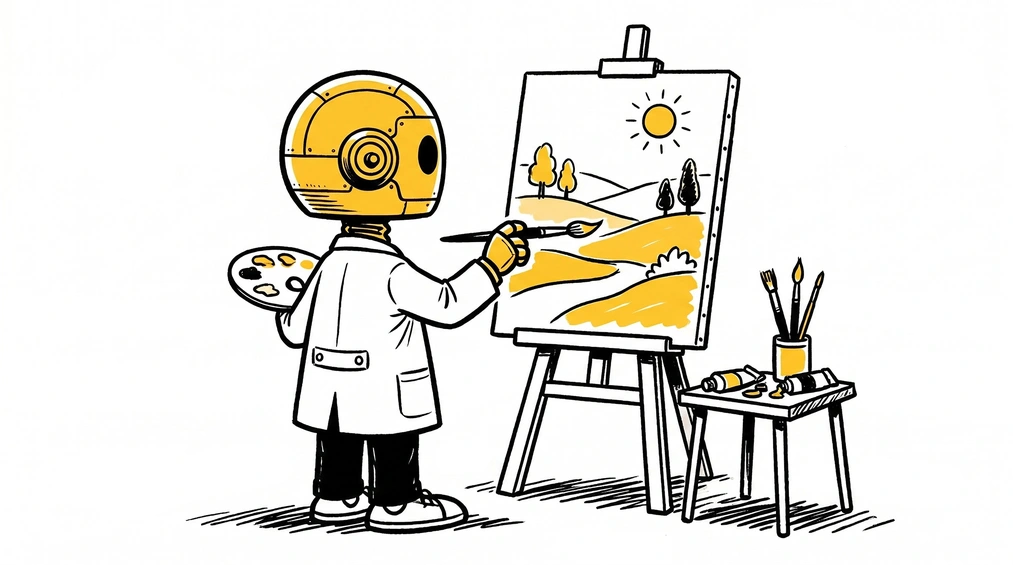
Common cases asked by clients
What does it look like with concrete market examples? The following require labeling:
- virtual staging of an empty apartment, i.e. AI-generated furniture and decorations,
- removal of bulky items and fixed furniture from the previous owner and showing the interior as empty,
- generation of new greenery, e.g. inserting a lush hedge where in reality there is a sparse fence,
- added terrace, pergola, or pond that does not exist in reality,
- drone photo with replaced surroundings of the plot.
You can get by without labeling when doing minor “digital cleaning” (removing cables, dishes, or clothes does not change the geometry of the space) and color correction (reviving yellowed grass is not the same as generating a new lawn). The obligation also does not cover sky replacement, removal of a passerby or parked car, exposure and contrast adjustment, or noise reduction of a photo from a dark interior. All that falls under the category the Commission considers to have little impact on assessing authenticity.
Attention! Straightening perspective and brightening the interior may look harmless but have their limits. If after editing a room appears noticeably larger or brighter than it really is, you're back to the question of the product’s features. A reasonable point of reference is whether a buyer entering the flat would think it’s a different place.
A separate category is visualizations of a development still under construction. A simple render of the structure is not a deepfake, but once you place it into a photograph of an existing street or juxtapose it with photos of finished apartments without clear distinction, the viewer no longer knows what they are seeing. Then labeling is necessary, not so much because of the render itself, but because of the way the materials are combined.
The second set of regulations that’s easy to forget
The AI Act does not operate in a vacuum. The Commission’s guidelines explicitly state that the deepfake criterion should be understood independently and separately from the concept of misleading practice known from unfair commercial practices regulations. Both regimes apply in parallel and are measured by different standards.
What does that mean in practice? That editing real estate photos could be risky long before the AI Act. An unfair market practice does not ask what tool was used to create an image, so a photoshopped terrace is as problematic in Photoshop as it is in a generator. Consumers have their own claims on that basis, and the President of UOKiK can impose a penalty on the business. Labeling a photo as AI-generated fulfills the obligation under Article 50, but does not legalize the deceptive practice itself.
Keep that in mind especially with staging. The label “interior arrangement generated by AI” ensures transparency, but if at the same time the photo suggests a finish standard that the property does not have, the problem remains.
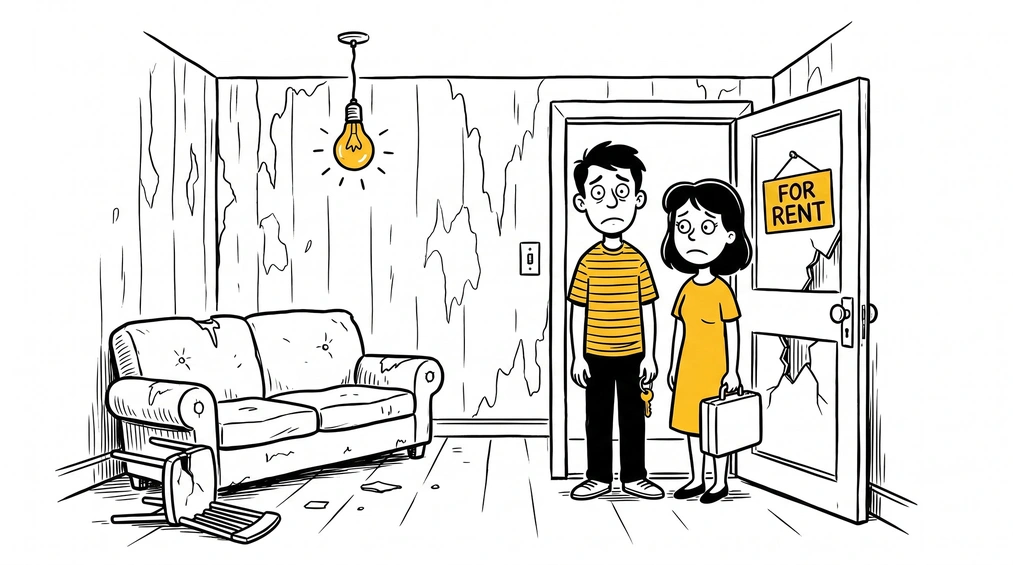
Who is responsible: the photographer, the agency or the developer?
Here is a surprise that is just starting to break through in the industry. The guidelines say that a company that merely commissions the material and does not decide whether and how the contractor uses AI is not a user subject to the obligation and has no liability under Article 50(4). The obligation lies with the one who presses the button.
In a typical setup this means the photographer or the studio preparing the materials, not the developer who orders the session. The listing portal is also not a user, since it only distributes third-party content, although the Commission strongly encourages services to keep any labels that were introduced earlier. The situation changes when the client chooses the tool themselves or commissions specific editing, because then they take over the decision and with it the responsibility.
Therefore, in your contract with the contractor it is worth including one sentence: the contractor labels materials requiring disclosure under Article 50(4) of the AI Act, and the client does not remove those labels when publishing. The most common problem is not that no one labeled the photo, but that the label disappeared when the frame was cropped to fit the portal’s format.
How to label a photo in a listing?
The label must be visible to a human without any tools and reach the viewer at the latest on first contact with the photo. File metadata is not enough, and information hidden in the service’s terms and conditions is even less so, because the regulation requires that it can be noticed under normal viewing conditions.
In a listing, a badge burned into the corner of the photo plus a sentence in the property description works. Just watch out for one pitfall: the watermark cannot cover essential attributes of the property, but you also shouldn't push it to the very edge. Listing portals like to automatically trim photo edges, cropping them, for example, into a square for thumbnails. In the property text a simple formula is enough, for example: “Interior arrangement generated using AI. The photo does not reflect the actual furnishings of the property.” If the staging applies only to part of the gallery, label those specific frames rather than the whole listing collectively, because then the message becomes unreadable.
Failure to label can result in up to 15 million euros or 3 percent of global turnover, although for small and medium-sized enterprises the lower amount is taken. Oversight is conducted by the Commission for the Governance of Artificial Intelligence, which will start work in November 2026. The real risk for a single agency does not lie in the AI Act penalty, but in a complaint from an unhappy buyer who, after seeing the apartment, compares it with the listing photos.
After going through all these cases, two simple habits remain.
For each asset, ask whether AI has altered anything that the buyer will see with their own eyes when viewing the property, and if so, add a label. Treat staging as a design proposal, not as a photo of the property, and describe it accordingly. I hope that after this reading you already know where retouching ends and content requiring labeling begins :)
Sources on which this article is based
Legal status as of the publication date. References to the guidelines concern paragraph numbers in the European Commission document of 20 July 2026. This article is for informational purposes and does not constitute legal advice.
- Regulation (EU) 2024/1689 (AI Act) - Art. 50(4) and (5) and Recital 133
- European Commission guidelines on transparency obligations under Art. 50 of the AI Act - §14, §16, §64, §68, §71, §73, §117-119, §141-143 and §154
- Code of Practice on Transparency of AI-Generated Content - final version of 10 June 2026, including an icon set
- C2PA Specification (Content Credentials)
- IPTC Digital Source Type dictionary - the value trainedAlgorithmicMedia for generated content
Author

Przeczytaj o programie AI - Artificial Intelligence na naszym blogu
-
![How to Label AI Content According to the Law? Ready-Made Formulas for Designers and Archviz Studios.]()
How to Label AI Content According to the Law? Ready-Made Formulas for Designers and Archviz Studios.
How to Legally Label AI Visualizations? Check When a Label Is Mandatory and Copy Ready-Made Formulas for Your Projects. -
![Do you have to label visualizations as AI? What does the AI Act really say and what changes on August 2, 2026?]()
Do you have to label visualizations as AI? What does the AI Act really say and what changes on August 2, 2026?
AI Act from August 2! Do you have to label 3D visualizations as AI? Check where the legal boundary lies between concept and deepfake. -
![AI for furniture manufacturers - See how to create furniture packshots and catalog arrangements with raya.design]()
AI for furniture manufacturers - See how to create furniture packshots and catalog arrangements with raya.design
Packshots without time-consuming sessions? Discover Raya Design. Change upholstery and create arrangements with AI in moments. See how it works! -
![Virtual AI home staging - how to furnish an empty apartment from a photo in one minute using Ray?]()
Virtual AI home staging - how to furnish an empty apartment from a photo in one minute using Ray?
Fast interior transformation without 3D modeling? Meet Ray Design. Furnish an empty apartment from a photo in one minute with AI. Come in and see how it works!