EN
EN PL
PL ES
ES


Publication date: 26-08-2025 | Update date: 26-08-2025 | Author: Mateusz Ciećwierz

-
Online courses
- All
 3ds Max
 AI - Artificial Intelligence
 Blender
 Corona renderer
 GstarCAD
 LayOut
 Photoshop
 Interior Design
 Revit
Revit Sketchup
 Stable Diffusion
 V-ray
V-ray
"Online courses" are comprehensive online training programs that will help you quickly master the software you are interested in.
- Plugins
- 3D Models
- Help
- Articles
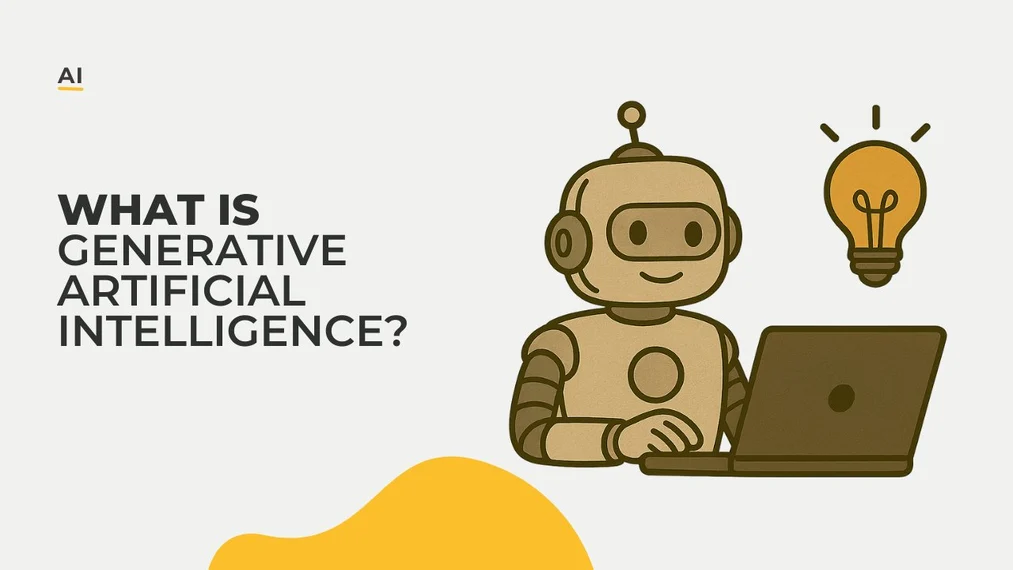
What is Generative Artificial Intelligence? Everything You Need to Know
Generative artificial intelligence is one of the hottest topics in the world of technology today. Although its concept has existed for years, only recent breakthroughs have made it accessible to all of us. Did you know that you probably use it almost every day?
Index
What exactly is generative AI?
Generative artificial intelligence is a technology that can create new content based on the data it was trained on. Unlike traditional AI systems, which only analyze and classify information, generative AI works creatively - producing new texts, images, music, programming code, and even videos.
Simply put, it is like teaching a computer to observe millions of examples and then asking it to create something similar but entirely new. The system learns patterns, styles, and rules from vast datasets to later generate original content.
The key difference between generative AI and other types of artificial intelligence is the ability to create, not just analyze. While traditional AI models can recognize whether a picture shows a cat or a dog, generative AI can create an entirely new image of a cat based on a text description.
History and development of generative artificial intelligence
The origins of generative AI date back to the 1950s, when the first algorithms capable of creating simple patterns began to be experimented with. However, the real breakthrough came only in the last decade thanks to the development of deep neural networks and the availability of massive computational resources.
In 2014, Ian Goodfellow introduced the concept of GAN (Generative Adversarial Networks), which revolutionized the way of thinking about AI content generation. Two years later, Google DeepMind presented WaveNet, a system that generates realistic human speech.
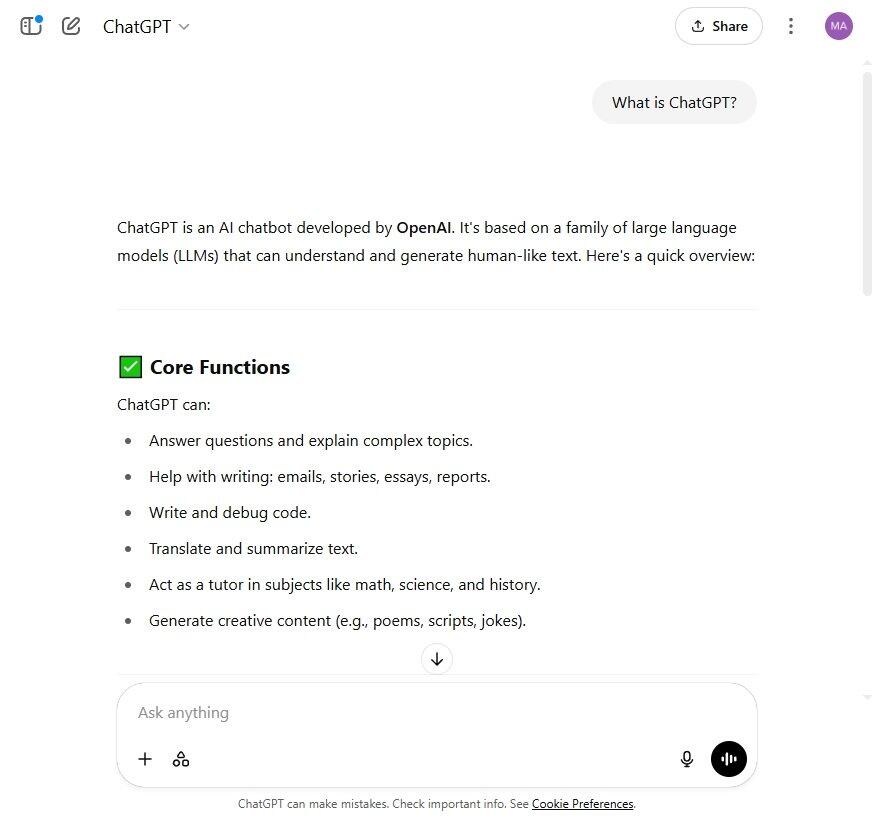
The breakthrough moment for the general public came in 2022 with the launch of ChatGPT and DALL-E 2. Suddenly, generative AI was no longer the domain of scientists and became accessible to everyone. That was when most of us experienced the power of this technology for the first time.
Today, in 2025, we have advanced models like GPT-4, Claude 4, and Midjourney at our disposal, which can produce content nearly indistinguishable from human creations. Development is so rapid that every few months new possibilities emerge that just a year ago seemed like science fiction.
Types and applications of generative AI
Generative artificial intelligence is not limited to one type of content. Modern systems can create a variety of multimedia, each requiring a specialized approach.
Text generation is perhaps the most well-known application, represented by ChatGPT, Claude, or Gemini. These systems can write articles, answer questions, create poetry, assist in programming, and even carry on complex conversations. They use language models trained on vast text corpora from the internet.
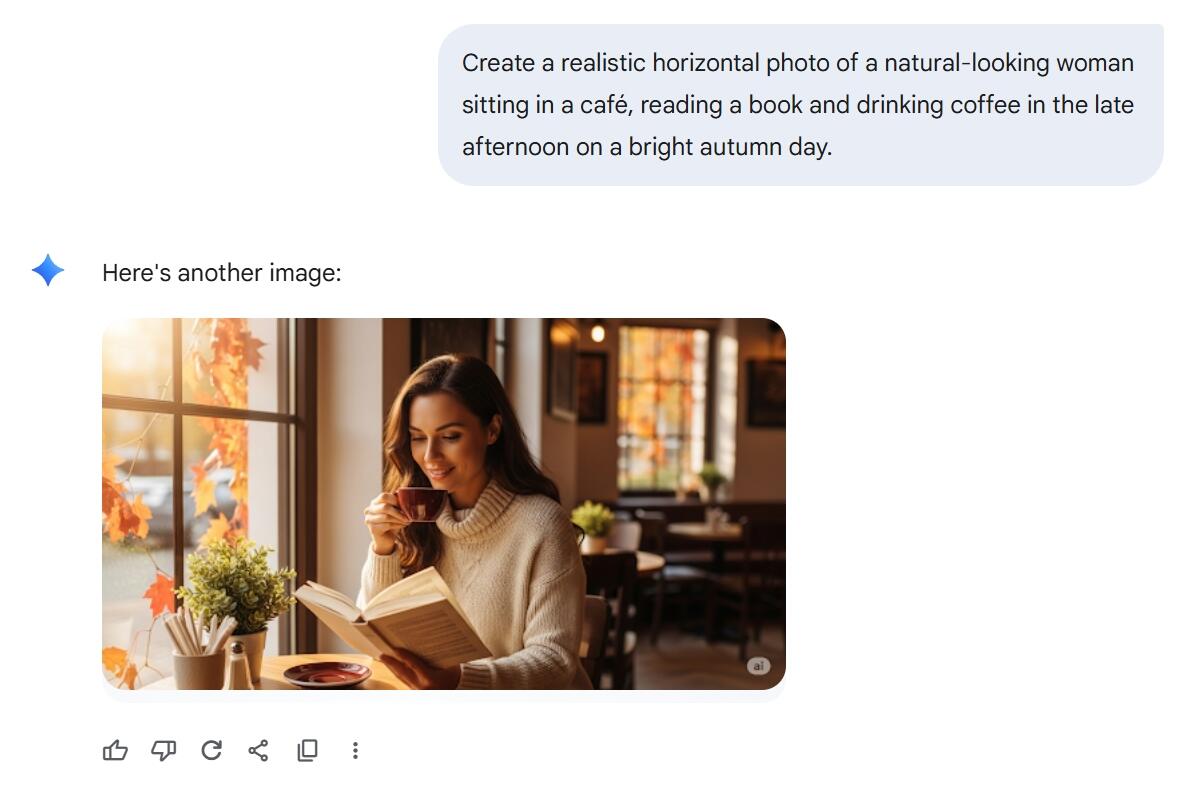
Image creation is a field that particularly fascinates users. Tools like DALL-E, Midjourney, or Stable Diffusion can generate photorealistic images, abstract works of art, or technical illustrations based on text descriptions. For interior designers, this means the ability to quickly visualize ideas without the need for rendering.
Music and sound generation is a growing branch where AI creates melodies, arrangements, and even full compositions in various musical styles. Systems like AIVA or Amper Music help composers create film or advertising music.
Programming code generation is revolutionizing developers' work. GitHub Copilot or CodeT5 can write functions, debug code, or translate between programming languages, significantly speeding up the software development process.
In the context of architecture and interior design, generative AI opens up entirely new possibilities. We can see how artificial intelligence helps interior architects in their daily work, from automating inventory to creating inspiring design concepts.
CHECK OUT THE AI COURSE IN INTERIOR DESIGN
How does generative artificial intelligence work?
Understanding how generative AI works can seem complicated, but the fundamental mechanisms can be explained in an accessible way. The basis of operation is probabilistic models that learn to predict what should come next in a data sequence.
In the case of text, the model analyzes billions of sentences and learns which words most frequently follow each other in various contexts. When we ask a question, the system does not "know" the answer upfront but generates it word by word, choosing the most probable continuations based on the patterns it has encountered.
Transformer neural networks are the architecture that enabled a qualitative leap in text generation. The attention mechanism allows the model to "remember" earlier parts of the text and take them into account when generating subsequent words, making the output coherent and logical.

In image generation, diffusion models dominate, working on the principle of gradually "denoising" an image. They start from random noise and step by step transform it into an image matching the given description. It's a bit like watching a photograph develop in an analog darkroom, only in reverse.
It's crucial to understand that AI does not "think" like humans. It has no consciousness or true understanding of the content it generates. It operates based on complex statistical patterns learned from training data. However, this does not diminish the usefulness of the results, which often match or even surpass human capabilities.
Advantages and limitations of generative AI
Generative artificial intelligence brings enormous benefits, but also significant limitations that are worth being aware of.
The most important advantages are speed and scalability. Tasks that previously took hours or days can be done in minutes. An interior designer can generate dozens of layout concepts in the time it used to take to produce one visualization. Similarly, a copywriter can create variations of ad copy in seconds.
Democratization of creativity is another key benefit. Generative tools allow people without specialized education to create high-quality content. Anyone can write code, create an illustration, or compose music with just an idea and the ability to communicate with AI.
However, the limitations are equally significant. Generative AI can produce false or incorrect content, especially on specialized topics. Systems do not have access to the latest information and can "hallucinate" facts that sound plausible but are untrue.
There is also a risk of overreliance on AI at the expense of developing one's own creative skills. While AI is a powerful tool, it should not replace human creativity and critical thinking, but rather support them.
The future of generative artificial intelligence
Generative AI is evolving at an unimaginable pace. The coming years will bring multimodal models that will seamlessly switch between text, image, sound, and video in a single session. Imagine a system that, based on a sketch and description, creates not only an interior visualization but also a 3D virtual tour with appropriate lighting and acoustics.
Personalization will be key. Future systems will learn our preferences and work style, becoming true assistants tailored to individual needs. An interior designer will be able to have a "digital collaborator" who understands their style and can generate proposals that match their aesthetic.
Integration with augmented and virtual reality will open new possibilities for project presentations. Clients will be able to "walk" through designed interiors before work begins, and AI will generate layout variants in real time based on their reactions.
Equally important will be the development of ethical standards and regulations. The industry must establish guidelines for the responsible use of AI, protecting the rights of creators and ensuring transparency in the application of these technologies.
Generative artificial intelligence is ceasing to be a futuristic vision and becoming an everyday work tool. The key to success will be not replacing human creativity but enriching it and freeing it from routine tasks. Learning the principles of writing effective prompts will become as important as mastering basic computer software.
CHECK OUT THE AI COURSE FOR BEGINNERS
The future belongs to those who can combine human intuition with the power of generative AI, creating solutions that neither side could achieve on its own.
Author

Przeczytaj o programie AI - Artificial Intelligence na naszym blogu
-
![Virtual staging and AI photos in real estate listings - what does the AI Act change?]()
Virtual staging and AI photos in real estate listings - what does the AI Act change?
The AI Act vs real estate. Does virtual staging require an AI label? Find out how to avoid legal pitfalls and properly label photos. -
![How to Label AI Content According to the Law? Ready-Made Formulas for Designers and Archviz Studios.]()
How to Label AI Content According to the Law? Ready-Made Formulas for Designers and Archviz Studios.
How to Legally Label AI Visualizations? Check When a Label Is Mandatory and Copy Ready-Made Formulas for Your Projects. -
![Do you have to label visualizations as AI? What does the AI Act really say and what changes on August 2, 2026?]()
Do you have to label visualizations as AI? What does the AI Act really say and what changes on August 2, 2026?
AI Act from August 2! Do you have to label 3D visualizations as AI? Check where the legal boundary lies between concept and deepfake. -
![AI for furniture manufacturers - See how to create furniture packshots and catalog arrangements with raya.design]()
AI for furniture manufacturers - See how to create furniture packshots and catalog arrangements with raya.design
Packshots without time-consuming sessions? Discover Raya Design. Change upholstery and create arrangements with AI in moments. See how it works!