EN
EN PL
PL ES
ES


Division of Functional Zones
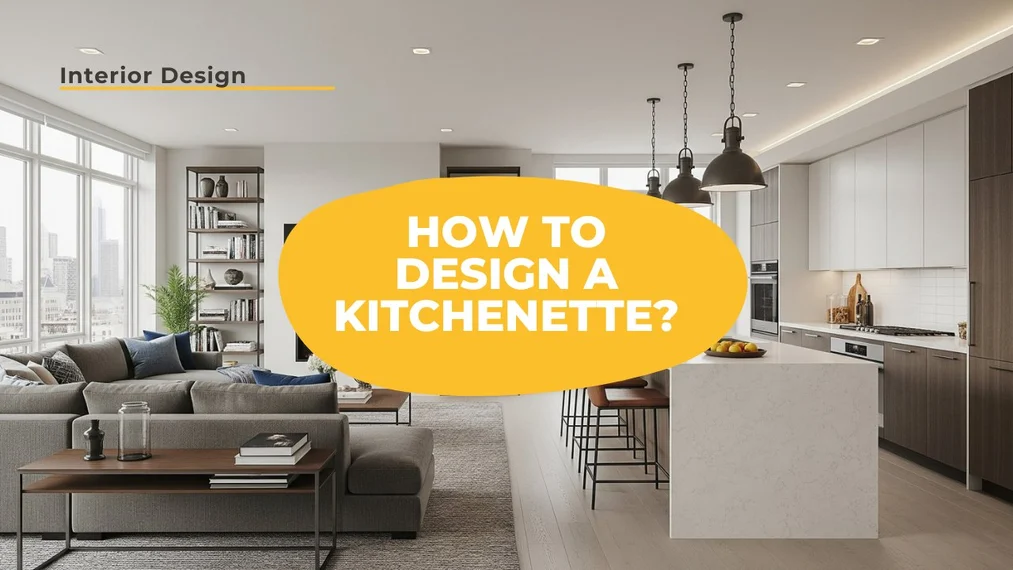
Clear delineation of the living room and kitchen annex does not require building partition walls. We can achieve this through a difference in floor height, changes in finishing materials, or by using a peninsula or kitchen island as a natural boundary between zones.
The kitchen island serves a dual function – it provides additional workspace in the kitchen while visually separating the zones. It can also function as a breakfast bar or extra serving area during gatherings. Varying lighting levels help define boundaries – bright, functional light over the worktop and warmer, mood lighting in the living room.
It is worth considering circulation paths – movement between the kitchen and living room should be natural and not interfere with resting or working areas. Avoid situations where passing from the kitchen to other rooms requires crossing the center of the living room.
Stylistic and Color Consistency
An open space requires a unified stylistic concept. This does not mean everything must look identical but rather that the elements coexist harmoniously. A shared color palette and repeating materials create visual continuity between zones.
Pay special attention to floor finishes. A uniform floor across the entire space visually enlarges it, but you can also use different materials – for example, tiles in the kitchen annex and wood in the living room, connected by a thoughtfully placed transition strip.
Furniture in both zones should be selected in a similar style – if you choose modern handleless kitchen fronts, the living room furniture should also feature clean, minimalist lines. Repeating accents – such as similar handles, furniture legs, or decorative elements – create a cohesive design.
Planning the Functional Kitchen Layout
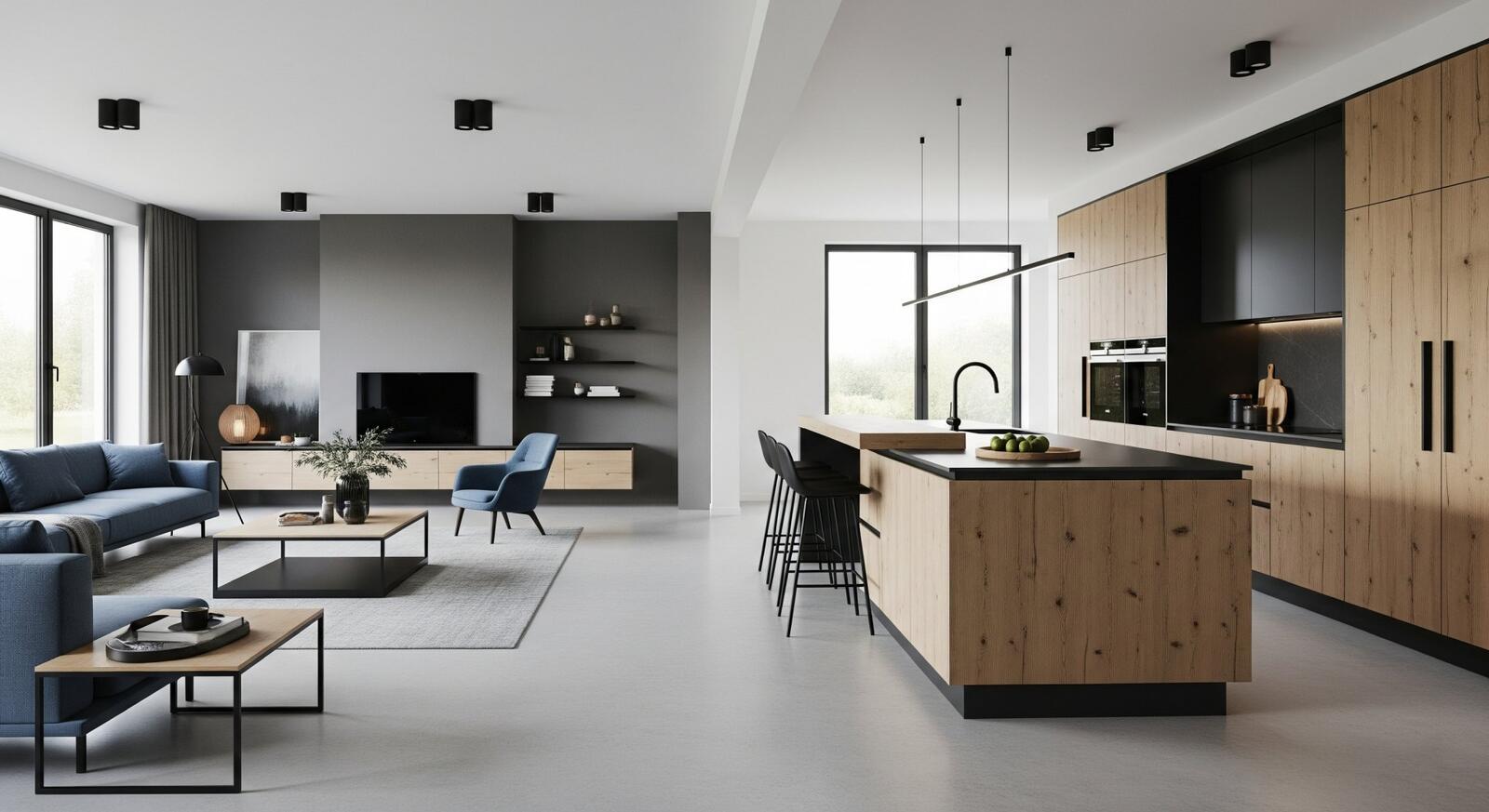
In a kitchen annex, following the work triangle principle is especially important – the refrigerator, sink, and cooktop should form an ergonomic layout that minimizes unnecessary movement during cooking. In a small space every centimeter counts.
Worktop height should be adjusted to the main user’s height – the standard 85–90 cm may require modification. Ergonomics of upper cabinets also matter – mount them at a height that allows easy reach without overextending.
Detailed principles of designing functional kitchen layouts can be found in our course – How to Design a Kitchen, where we cover all aspects of ergonomics and functionality.
Storage planning should be well thought out – drawers in lower cabinets offer better access than traditional shelves. A breakfast nook can be arranged at an island or peninsula, creating a natural transition area between the kitchen and living room.
Storage Systems and Organization
A kitchen annex requires maximizing usable space within limited areas. Cargo drawers in tall cabinets and corner systems in blind corners allow you to use every available centimeter. Drawer organizers help maintain order and ease daily use.
Hidden storage in the living room can be integrated with seating furniture – ottomans with storage, coffee tables with drawers, or media units with space for accessories. Built-in shelves serve decorative and functional purposes simultaneously.
Closed storage in the kitchen is particularly important – open shelves can quickly collect dust and create visual chaos in an open plan. Soft-close systems in drawers and doors ensure comfortable operation and eliminate unnecessary noise.
Multi-zone Lighting
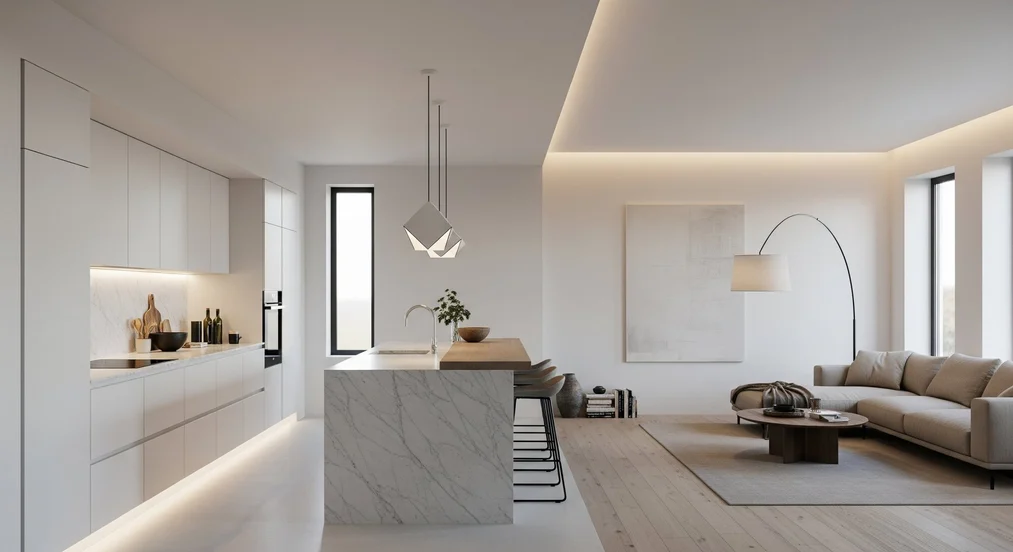
Diverse lighting needs in the living room and kitchen require a well-thought-out system. In the kitchen, you need bright, functional light for work – under-cabinet lighting eliminates shadows on the worktop, while pendant lamps over the island provide additional focused light.
In the living room, focus on ambient lighting – table lamps, floor lamps, or indirect lighting hidden behind ceiling moldings create a cozy atmosphere. Dimmers allow you to adjust light levels to the time of day and activity.
Shared decorative lighting – such as statement pendant lamps or track lighting – can visually link the two zones. Maintaining a consistent color temperature of light across the open space is essential.
Ventilation and Acoustic Comfort
Efficient ventilation in the kitchen annex is fundamental for the comfort of the entire space. The range hood must be properly sized for the kitchen area and cooking style – its capacity should be 10–12 times the room volume per hour.
Noise reduction between zones is achieved by choosing quiet appliances and incorporating sound-absorbing materials. Soft furniture in the living room, rugs, and curtains naturally absorb kitchen noises. A built-in dishwasher with additional acoustic insulation significantly lowers noise levels.
Consider planning for temporary isolation of the kitchen – sliding panels or folding screens allow you to block odors and noise during heavy cooking or cleaning.
Selection of Materials and Finishes
Practicality in the kitchen annex must go hand in hand with aesthetics. Worktops should be stain-resistant and easy to clean – quartzite, granite, or high-quality laminates work best. The wall behind the worktop requires materials resistant to grease and moisture.
In the living room you can opt for more decorative materials – natural wood, stone, or textiles add warmth and coziness. Maintaining easy cleaning is crucial since spills in one zone are visible from the other.
Kitchen floors must resist spills and be easy to clean. If you choose different materials for each zone, ensure harmonious transitions and similar finished floor heights.
CHECK HOW TO DESIGN A KITCHEN COURSE
Plants and Natural Elements
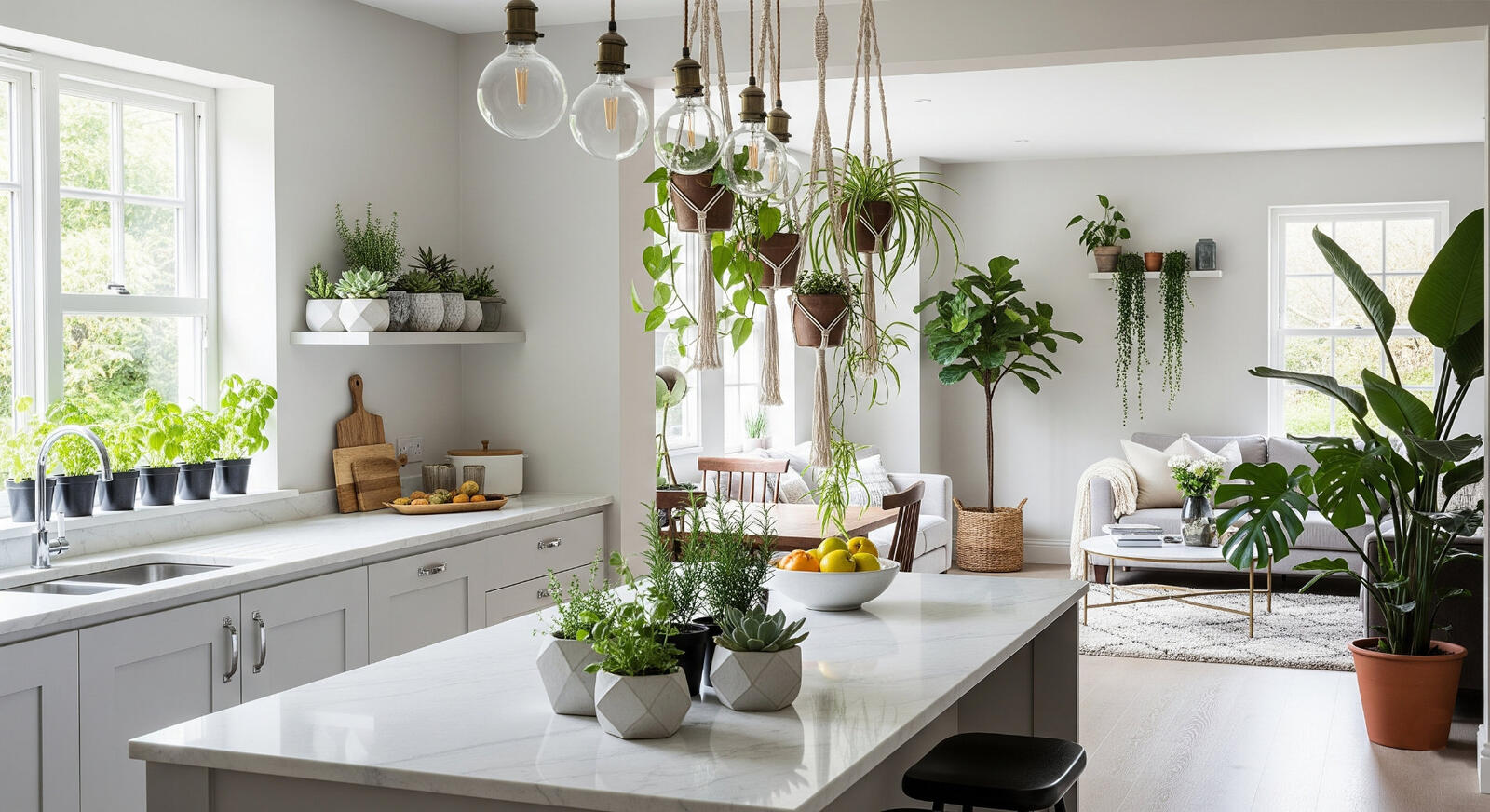
Greenery in an open space plays a key role – it purifies the air and softens contrasts between functional and relaxation areas. Kitchen plants should withstand temperature and humidity fluctuations – cooking herbs on the windowsill or small succulents on the counter are ideal.
In the living room, you can include larger potted plants to create natural zones and bring life to the space. Hanging gardens or tall plant stands save floor space, which is important in smaller areas.
Learn more about integrating plants in interior design in our article – The Importance of Plants in Interior Design, where we discuss plant selection and placement in various room types.
Technologies and Installations
Planning electrical installations in an open space requires special attention. Outlets in the kitchen island should be hidden yet easily accessible for small appliances. An integrated audio system can be built into kitchen units or the ceiling so music accompanies both cooking and relaxing in the living room.
Smart systems facilitate managing both zones – automatic lighting adjusts to the time of day and activity, and smart home allows controlling kitchen appliances from the living room. Induction cooktops are quieter and more efficient than traditional options.
The climate control system must account for the different thermal needs of each zone – cooking increases kitchen temperature, so independent regulation in various parts of the space is necessary.
Ergonomics and Safety
Child safety in an open space requires special consideration. Cabinet locks for cleaning products, rounded furniture corners, and controlled access to hot kitchen surfaces must be addressed during design.
Counter heights and cabinet depths are designed with main users in mind. A standard 60 cm cabinet depth may be too large for shorter individuals – consider 55 cm cabinets for better ergonomics.
Seating areas in the living room should avoid a direct view of the kitchen work surface – no one wants to look at dirty dishes while relaxing. Furniture orientation should allow communication between zones but also provide privacy when needed.
Maximizing Small Spaces
In small homes, every element must serve multiple functions. A folding table can act as a desk during the day and a dining table in the evening.