EN
EN PL
PL ES
ES


Publication date: 02-09-2025 | Update date: 27-08-2025 | Author: Mateusz Ciećwierz

-
Online courses
- All
 3ds Max
 AI - Artificial Intelligence
 Blender
 Corona renderer
 GstarCAD
 LayOut
 Photoshop
 Interior Design
 Revit
Revit Sketchup
 Stable Diffusion
 V-ray
V-ray
"Online courses" are comprehensive online training programs that will help you quickly master the software you are interested in.
- Plugins
- 3D Models
- Help
- Articles
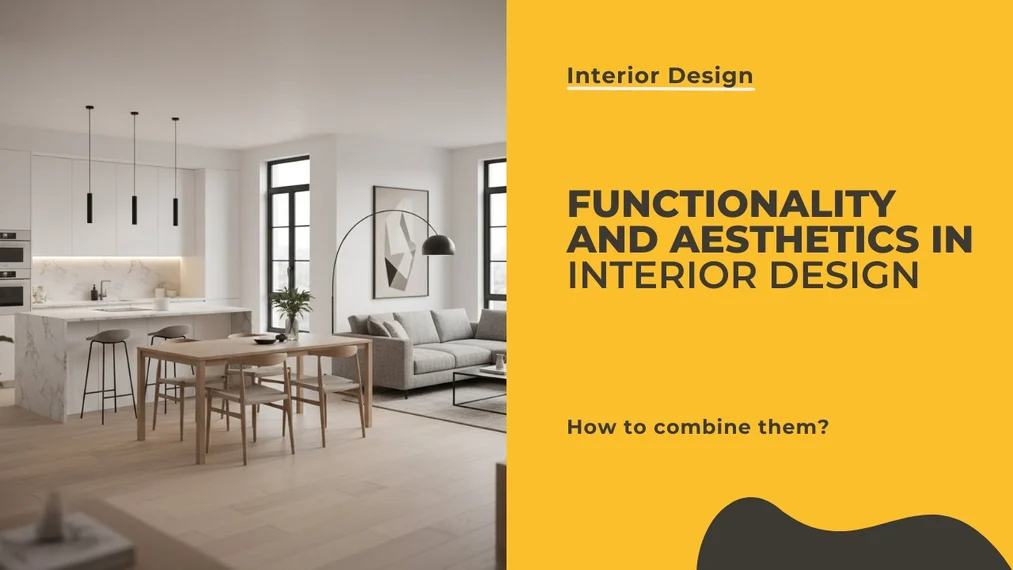
Functionality and Aesthetics in Interior Design - How to Combine Them?
Combining functionality with aesthetics is the foundation of professional interior design. A beautiful interior that doesn't serve its users quickly loses its charm. Conversely, a purely functional space without character fails to inspire or motivate living. We reveal ways to harmoniously blend both aspects.
Index
User Needs Analysis as a Starting Point
Every successful project begins with a thorough analysis of residents' lifestyles. A family with young children has different needs than a remote-working single or a retired couple. Inventorying daily activities helps identify the key functions that the interior must support.
Mapping household activities reveals natural traffic flows and areas of concentrated activity. The entry zone must accommodate the entire family's footwear, the work corner requires proper lighting and quiet, and the common area should allow for both active time and relaxation.
It is important to understand the hierarchy of needs – which functions are essential daily and which are used occasionally. This enables optimal allocation of space and budget among the various project elements.
Designing from Function to Form
Functionality as a foundation does not mean sacrificing beauty – on the contrary, true elegance arises from a perfect match of form to purpose. Ergonomic proportions of furniture can be as aesthetic as they are fashionable, as opposed to impractical designs.
Functional layouts are designed considering the users' natural habits. Circulation routes should be intuitive – they shouldn't force residents to adapt to nonstandard paths around the home. Storage areas are located close to their points of use – cosmetics in the bathroom, spices in the kitchen, clean towels near the shower.
Flexibility of layouts allows adapting the space to changing needs. Modular furniture or sliding systems enable transforming the living room into a workout area or guest room without major effort.
CHECK OUT INTERIOR DESIGN COURSES
Materials – Where Practicality Meets Beauty
Material selection largely determines whether the interior will be as beautiful after years of use as on the day it's handed over. Natural materials – wood, stone, linen, or wool – age gracefully, developing a characteristic patina rather than appearing worn out.
Surface durability is crucial in high-traffic zones. Kitchen countertops made of quartz or granite combine resilience with an elegant appearance. Entrance hall floors must withstand daily wear, yet can also introduce a warm color accent to the interior.
Ease of maintenance doesn't mean sacrificing texture and color. Modern fabrics offer antibacterial and stain-resistant coatings, and special impregnations protect natural materials from soiling without affecting their appearance.
Functional and Decorative Lighting
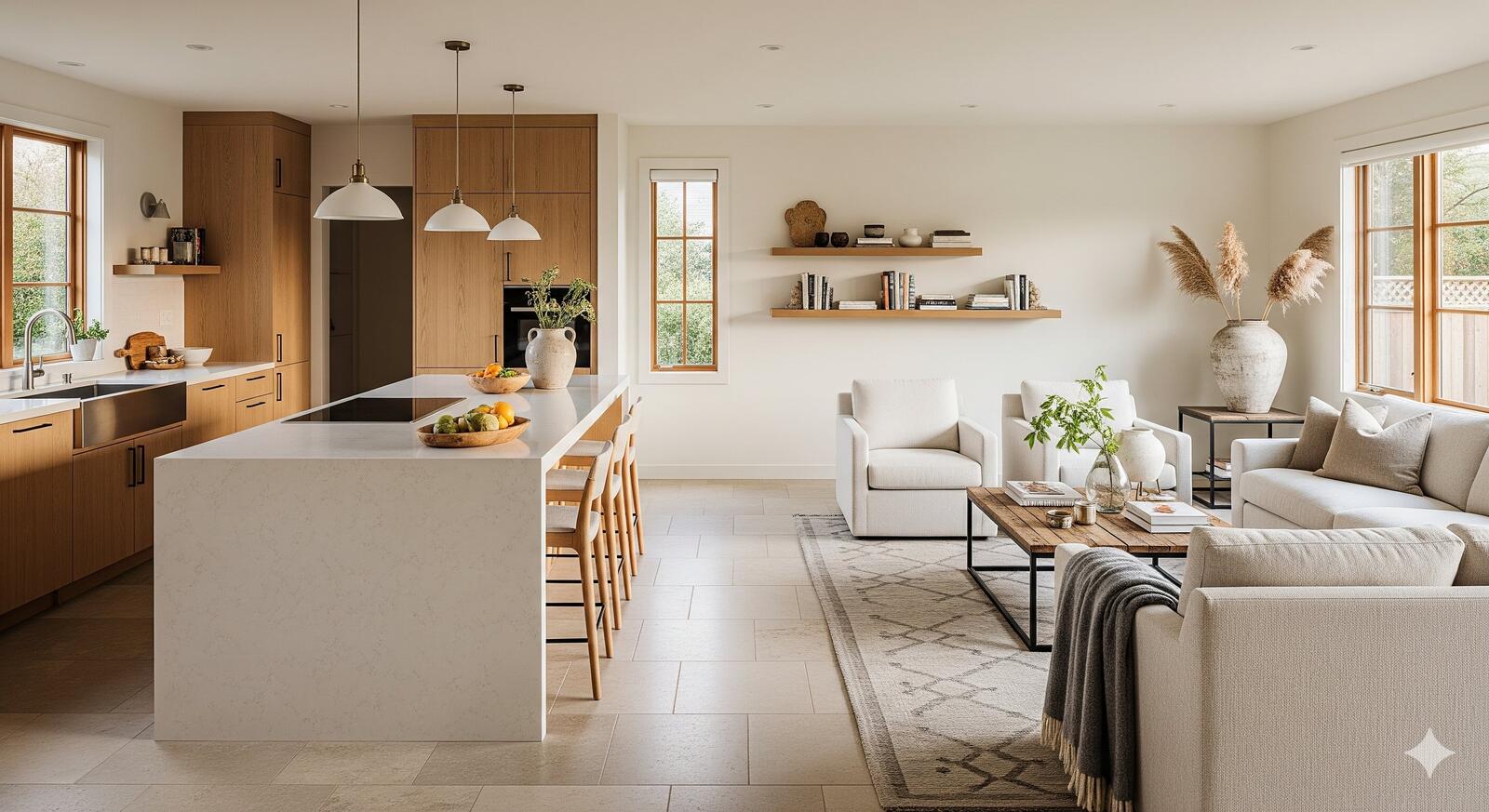
Lighting system must support all home activities while allowing for mood variations. Task lighting in the kitchen, at the desk, or by the bathroom mirror ensures comfortable working, while accent lighting highlights beautiful design elements.
Dimmers allow adjusting light intensity to the time of day and activity. Different color temperatures – energizing white light for work and warm, relaxing tones in the evening – support the body's natural circadian rhythms.
Decorative lamps can serve as sculptures or artistic elements, bringing personality to the space. You can find detailed lighting planning guidelines in our article - Lighting in Interior Design – What to Consider.
Ergonomics as the Basis of Comfort
Ergonomic design is not limited to furniture dimensions – it encompasses holistic space planning with the users' comfort in mind. Counter heights, cabinet depths, and electrical outlet spacing are designed considering anthropometry and usage patterns.
Accessibility for people with varying physical abilities should be naturally integrated into the design. Wide passages, appropriately placed switches and handles, as well as non-slip surfaces in the bathroom are elements of universal design.
Psychology of space is as important as physical ergonomics. Room proportions, ceiling heights, and outdoor views influence our well-being and productivity. We minimize visual stress through thoughtful planning and avoiding sensory overload.
Hidden Functionalities
Smart solutions allow hiding functional elements without losing their accessibility. Cargo drawers in the kitchen, storage under stairs, or beds hidden in cabinets maximize space use while maintaining a clear aesthetic.
Smart home technology works best when invisible. Motion sensors, audio systems, or wireless chargers integrated into furniture provide comfort without compromising aesthetics. Cable management systems eliminate the visual clutter of cords.
Multifunctional furniture is the art of combining practicality with elegance. A coffee table with storage, a pouf serving as extra seating and storage, or a bookcase doubling as a room divider optimize space without aesthetic compromise.
CHECK OUT THE FUNCTIONAL LAYOUT TRANSFORMATION COURSE
Balance Between Order and Character
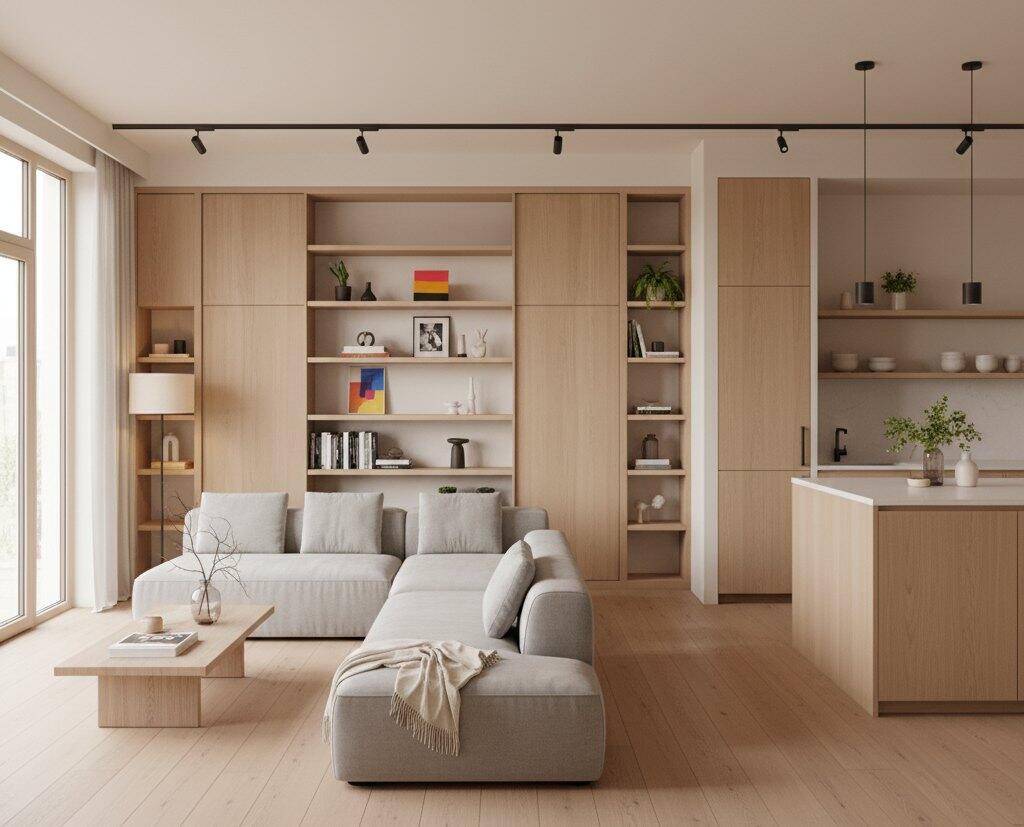
Storage spaces must be large enough to maintain order, but not all need to be hidden. Open shelves can display beautiful objects, books, or plants, becoming decorative elements. The 80/20 rule – hide 80% of items and display 20% as decoration.
Personalizing the space shouldn't conflict with functionality. Artworks, family photos, or collections find their place but don't interfere with daily use. Rotating decorations allows refreshing the interior without altering the functional layout.
Functional minimalism is the ability to limit oneself to truly necessary items that are high-quality and beautiful. It's better to have fewer objects that serve for years without losing their aesthetic value.
Forward-Thinking Design
Designing with the future in mind means anticipating residents' changing needs. Flexible layouts allow converting a children's room into an office or study. Universal installation solutions enable future modifications without the need for renovation.
Modularity of furniture systems allows expansion or reconfiguration as needed. Quality craftsmanship and timeless design ensure long-term satisfaction with the investment. Eco-friendly materials and energy-efficient solutions combine social responsibility with cost-effective use.
You can learn more about ergonomic aspects of design in our article - Ergonomics in Interior Design, where we discuss in detail the technological support for user comfort.
Conclusion
The balance between functionality and aesthetics is an art that requires experience, empathy, and understanding of user needs. The best projects are those in which beauty comes from perfectly fulfilling function – where every element has its purpose and contributes to the comfort of life. As designers, we have the privilege and responsibility of creating spaces that will serve people for years, which is why it's worth investing in thoughtful, durable, and genuinely beautiful solutions.
Author

Przeczytaj o programie Interior Design na naszym blogu
-
![Interior design in an old tenement building - what are the biggest challenges?]()
Interior design in an old tenement building - what are the biggest challenges?
Interior design in a tenement building is a challenge and an opportunity for a unique apartment. Find out what to pay attention to before renovation! -
![What to consider when designing a living room with a kitchenette?]()
What to consider when designing a living room with a kitchenette?
Check out our article and learn what to keep in mind when designing a kitchenette! -
![Interior Design Trends 2025 - A Guide for Architects and Designers?]()
Interior Design Trends 2025 - A Guide for Architects and Designers?
Discover the Latest Interior Trends in 2025! -
![Profile Builder 4 or Magic Molding? Comparison of Ornamentation Plugins in SketchUp]()
Profile Builder 4 or Magic Molding? Comparison of Ornamentation Plugins in SketchUp
How does Profile Builder 4 differ from Magic Molding? Scope, pricing, profile libraries, and learning curve. Find out which plugin fits your projects.