EN
EN PL
PL ES
ES


Publication date: 27-08-2025 | Update date: 27-08-2025 | Author: Mateusz Ciećwierz

-
Online courses
- All
 3ds Max
 AI - Artificial Intelligence
 Blender
 Corona renderer
 GstarCAD
 LayOut
 Photoshop
 Interior Design
 Revit
Revit Sketchup
 Stable Diffusion
 V-ray
V-ray
"Online courses" are comprehensive online training programs that will help you quickly master the software you are interested in.
- Plugins
- 3D Models
- Help
- Articles
3D Models in Real Estate Sales - How Do They Raise the Attractiveness of an Offer?
The real estate market demands increasingly attractive ways to present listings. Traditional photos and floor plans are no longer sufficient for clients who want to precisely explore the space before making a purchase decision.A 3D model is a digital copy of a property that opens up completely new marketing possibilities for developers and agents. With a single model, you can create an entire range of promotional materials – from realistic renderings to interactive virtual tours.
Index
What is a 3D real estate model and how to use it?
A 3D model is a digital representation of a building or apartment, created in software such as SketchUp, 3ds Max, or Archicad. It's the foundation on which a graphic designer can later create various marketing materials. One model - many applications is the main advantage of this solution.
Based on a ready-made 3D model, you can generate:
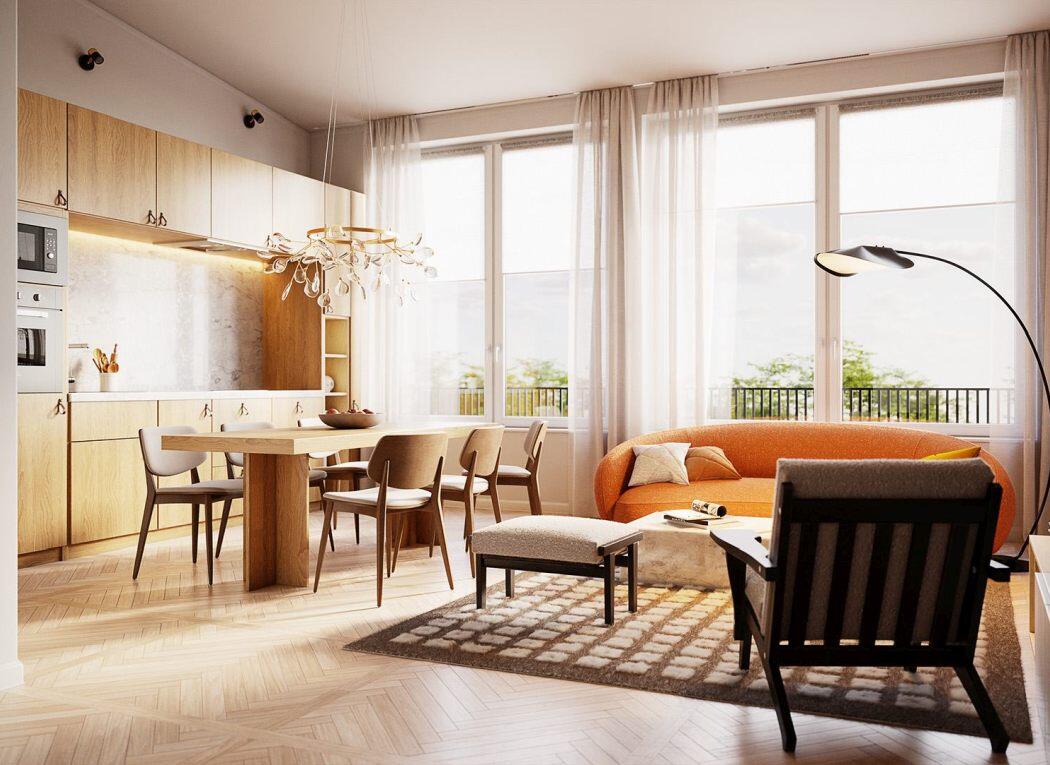
- Photorealistic interior visualizations - showing each room with perfect proportions, lighting, and finishes.
- Exterior visualizations - presenting the façade, garden, and surroundings of the building at various times of day.
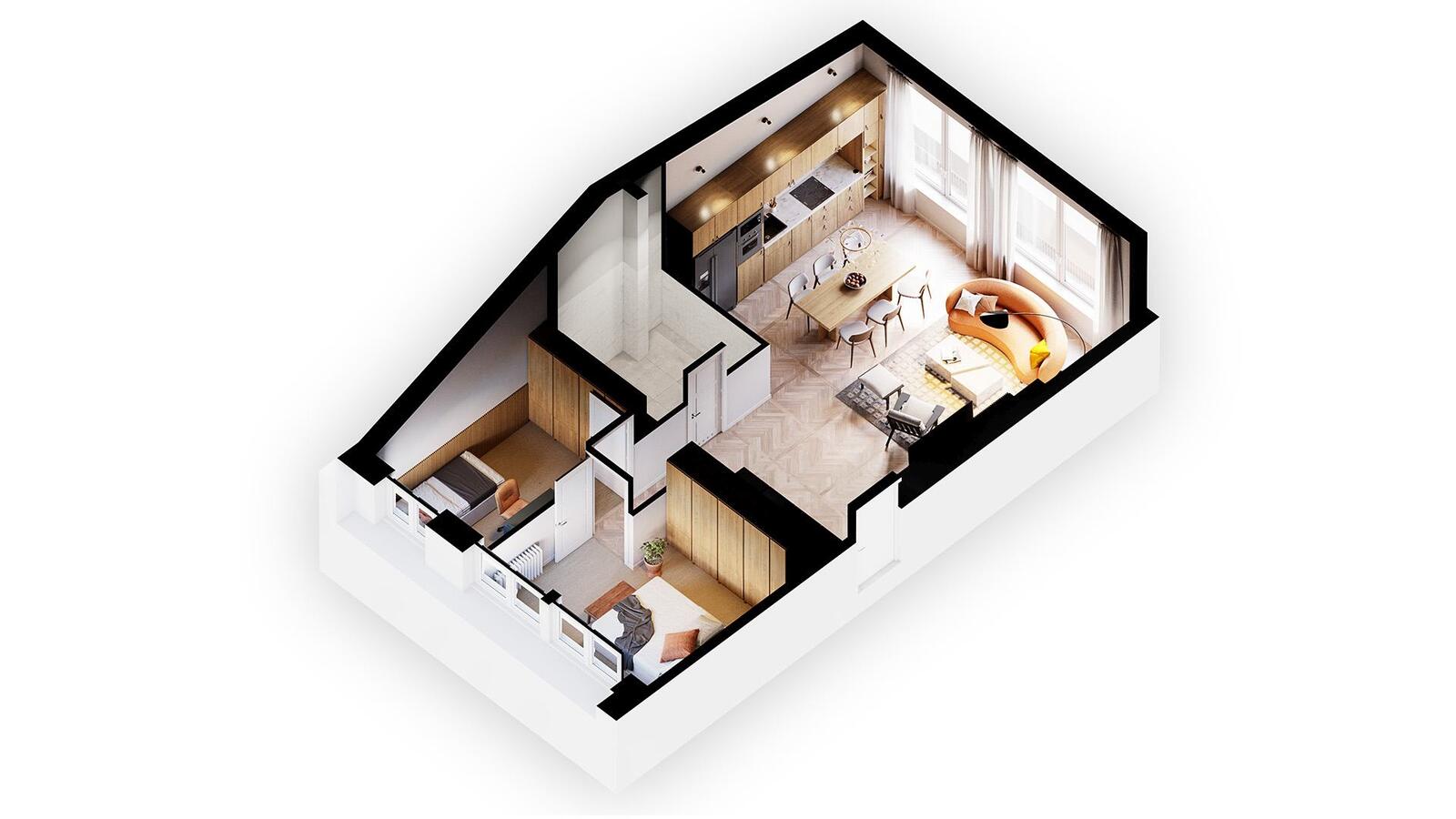
- Isometric floor plans - clear views showing the layout of rooms and the flow between them.
- Virtual tours - interactive presentations allowing clients to move around the property themselves.
Thanks to this approach, one model lasts for years and can be used to promote different apartments in the same building or development. This significantly reduces costs per sales unit.
Business benefits of having a 3D model
Flexibility in creating materials is the main advantage of having a 3D real estate model. Depending on needs, you can quickly generate new shots, change the layout, or present different finishing variants. There's no need to create visualizations from scratch every time.
Long-term costs are significantly lower than with a traditional approach. After the initial investment in the model, each subsequent visualization or rendering costs a fraction of the original amount. You can quickly respond to market changes or tailor materials to specific client groups.
Visual consistency is another significant benefit. All marketing materials derive from the same model, ensuring a uniform image of the development. Clients receive consistent information whether they're viewing a brochure, a website, or a virtual tour.
What types of visualizations can we create from a single model?
Interior visualizations are the primary use of a 3D model in real estate sales. We can showcase each room in different layouts, color schemes, or finishing styles. It is especially effective to present the same apartment in several variants - from minimalist to more classic.
Exterior views allow you to present the building façade, garden, terraces, balconies, and the immediate surroundings. The model enables creating shots from various perspectives and at different times of day, showing how the property's character changes with sunlight.
Isometric projections are a modern alternative to traditional floor plans. They show the three-dimensional layout of rooms, helping clients better understand proportions and connections between spaces. They are especially useful when presenting apartments with unusual layouts.
Animations and virtual tours engage clients on a much higher level. They can explore the space independently, check window views, or test different furnishing options in real time.
Technologies for creating 3D models for real estate
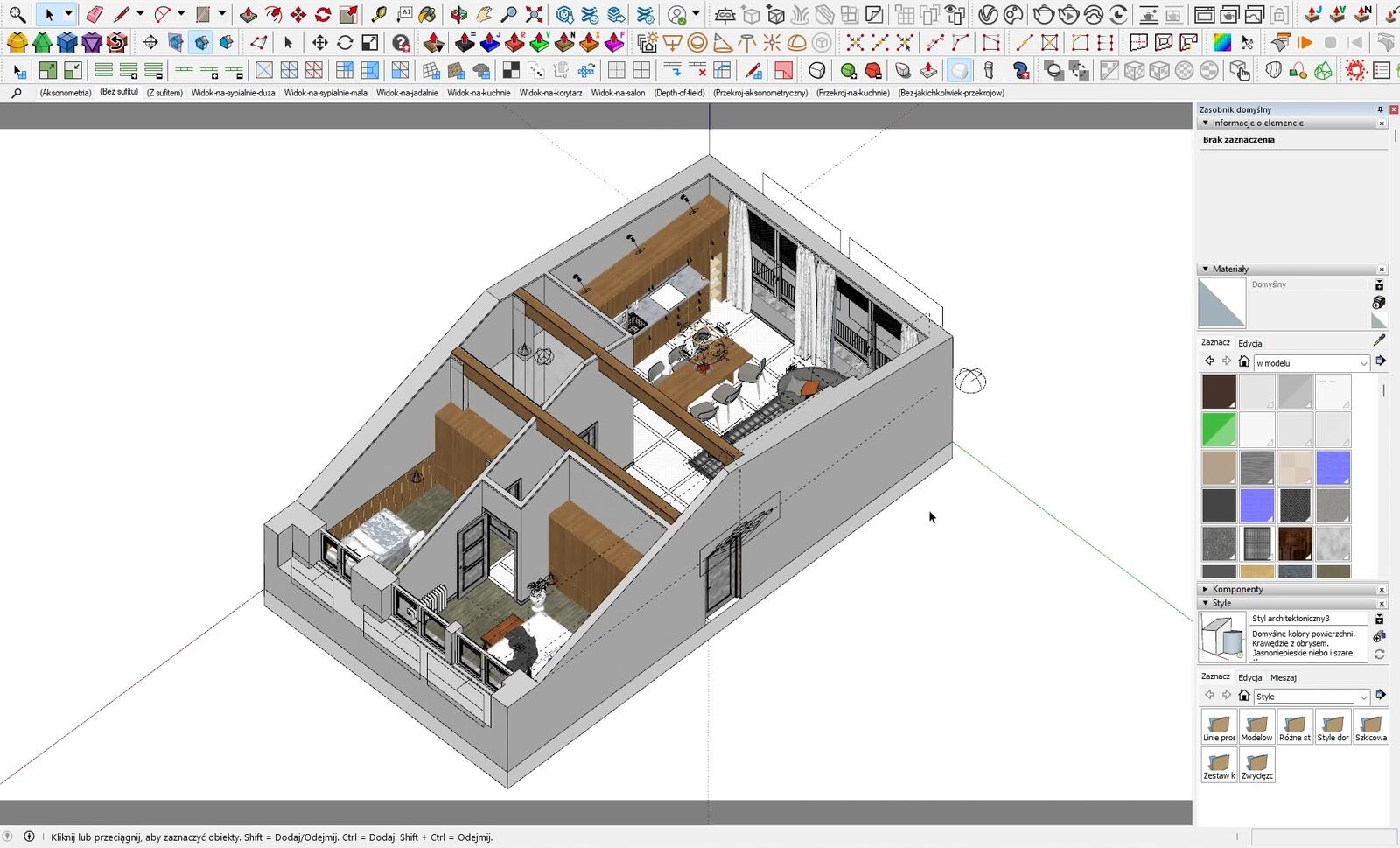
SketchUp with V-Ray rendering is the most popular solution in the real estate industry. The software offers intuitive modeling tools and excellent capabilities for rendering photorealistic materials. Learning this software is not complicated, and the results can be spectacular.
3ds Max with Corona Renderer is the choice for more advanced projects. It offers greater possibilities in animation and creating complex outdoor scenes with vegetation. However, it requires more experience from the user.
Archicad and Revit are solutions for architectural firms that want to combine design with marketing. A model created for design purposes can later be used to create sales materials.
AI tools are increasingly supporting the model creation process. They allow for automatic texture generation, quality enhancement of renders, or even creating layout variants based on text descriptions.
The process of creating a 3D model for sales purposes
First stage involves thoroughly analyzing the project documentation - plans, sections, and finishing specifications. The designer creates the basic geometry of the building, taking into account all architectural details and room proportions.
Second stage is developing materials and textures that match the actual finishes. This is a key moment that determines the photorealism of the final visualizations. You need to consider the material textures, colors, surface gloss, and installation patterns.
Third stage is configuring lighting and cameras. Proper lighting setup determines the presentation's mood and the renders' realism. The designer also prepares a library of viewpoints from which various shots will later be generated.
Final stage is test rendering and model optimization. The model must be efficient so that generating subsequent visualizations does not take too much time. A good model allows for quick creation of new shots in hours, not days.
CHECK OUT THE SKETCHUP + VRAY COURSE
Summary
A 3D model is a long-term investment that serves throughout the entire real estate sales cycle. It can be used for updating marketing materials, testing new layouts, or creating materials for different target groups. It's the foundation of modern real estate sales that opens up limitless possibilities for presenting an offer.
Author

Przeczytaj o programie Sketchup na naszym blogu
-
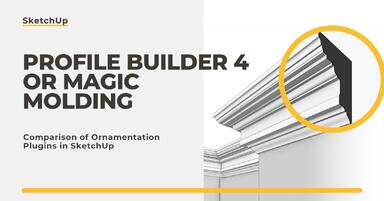
![Profile Builder 4 or Magic Molding? Comparison of Ornamentation Plugins in SketchUp]()
Profile Builder 4 or Magic Molding? Comparison of Ornamentation Plugins in SketchUp
How does Profile Builder 4 differ from Magic Molding? Scope, pricing, profile libraries, and learning curve. Find out which plugin fits your projects. -
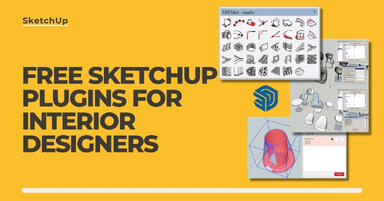
![The Best Free SketchUp Plugins for Interior Designers in 2026!]()
The Best Free SketchUp Plugins for Interior Designers in 2026!
Which SketchUp plugins are really worth having? Discover 7 free extensions for interior designers and find out which ones have just stopped being free! -
![English wainscoting in SketchUp - how to design wall panels step by step]()
English wainscoting in SketchUp - how to design wall panels step by step
How to design English wainscoting in SketchUp? Learn the rules for panel division, wainscot proportions, and speed up your work with the Magic Molding plugin. -
![Reversed Faces in SketchUp – why are blue faces showing and how to fix them?]()
Reversed Faces in SketchUp – why are blue faces showing and how to fix them?
Blue faces in SketchUp are flipped faces. Learn where they come from, how to quickly locate and fix them before they mess up your render or model export.