EN
EN PL
PL ES
ES


Publication date: 22-05-2025 | Update date: 22-05-2025 | Author: Mateusz Ciećwierz

-
Online courses
- All
 3ds Max
 AI - Artificial Intelligence
 Blender
 Corona renderer
 GstarCAD
 LayOut
 Photoshop
 Interior Design
 Revit
Revit Sketchup
 Stable Diffusion
 V-ray
V-ray
"Online courses" are comprehensive online training programs that will help you quickly master the software you are interested in.
- Plugins
- 3D Models
- Help
- Articles
How to Create a Proper Gastronomic Venue Design?
Preparing a design for a restaurant, café, or any other gastronomic venue is a major challenge. Creating such a project requires taking into account not only the atmosphere of the restaurant, but also a number of requirements specified by the sanitary inspectorate. It is also important to ensure that both the customer area and the back office are functional and ergonomic. Read the text and learn how to design a restaurant or café.
Index
Why is a good design of a gastronomic venue important?
In today's world, the competition in the gastronomy industry is huge. Simply serving excellent food is often not enough to stand out. It is also necessary to distinguish oneself with exceptional venue design. Properly planned space and created atmosphere are invaluable in attracting customers.
However, the design of a gastronomic space is not only what the customer sees when visiting the restaurant. It also includes the entire kitchen facilities. When designing them, remember that each equipment must meet a number of requirements and enable efficient work.
How to plan the space in a gastronomic venue?
Before you start designing the space in a gastronomic venue, familiarize yourself with the regulations. Check the sanitary and epidemiological requirements thoroughly. This will help you avoid the risk of your project not being approved by the sanitary inspectorate.
The design of culinary space can be divided into three stages:
- Checking OSH and sanitary regulations.
- Verifying how to implement these regulations in the specific designed space.
- Designing the customer zone (considering the intended restaurant atmosphere) and the kitchen equipment (taking into account the sanitary requirements).
We will now briefly discuss each stage, so that you know what to expect at each of them.
Ergonomics, safety, and sanitary-epidemiological regulations
Gastronomic venues are under special supervision of the sanitary inspectorate. Thanks to detailed control, it is possible to ensure that food storage and preparation are in appropriate conditions. Check what you need to pay attention to in order for the venue you design to meet all the requirements.
Compliance with sanitary-hygienic requirements
Every gastronomic venue must meet a number of specific sanitary-hygienic requirements. The requirements practically specify all elements of the gastronomic space. In the relevant regulations, you will find information which you should follow when designing a restaurant.
The requirements include, among others:
- materials from which worktops can be made
- door widths
- necessity of installing window screens that can be opened
- storage of cleaning and disinfecting agents separately from food
- ventilation
- access to water
Be sure to familiarize yourself with specific requirements before starting to design the venue.
Functionality - remember about technological flows in the kitchen
Ensure that the restaurant you design can function well and efficiently. Identify the technological flows in the kitchen, i.e., the work process diagram. Properly planned zones will not only facilitate work for the staff, but also positively affect the pace of food preparation. The kitchen technological flow starts from the refrigerator and ends at the stove. Make sure to take this into account when planning the layout of individual countertops and sinks. Also, ensure that the countertops are wide enough and there is enough space behind them for the staff to move comfortably alongside each other.
Check how to meet the sanitary inspectorate requirements in the designed gastronomic space
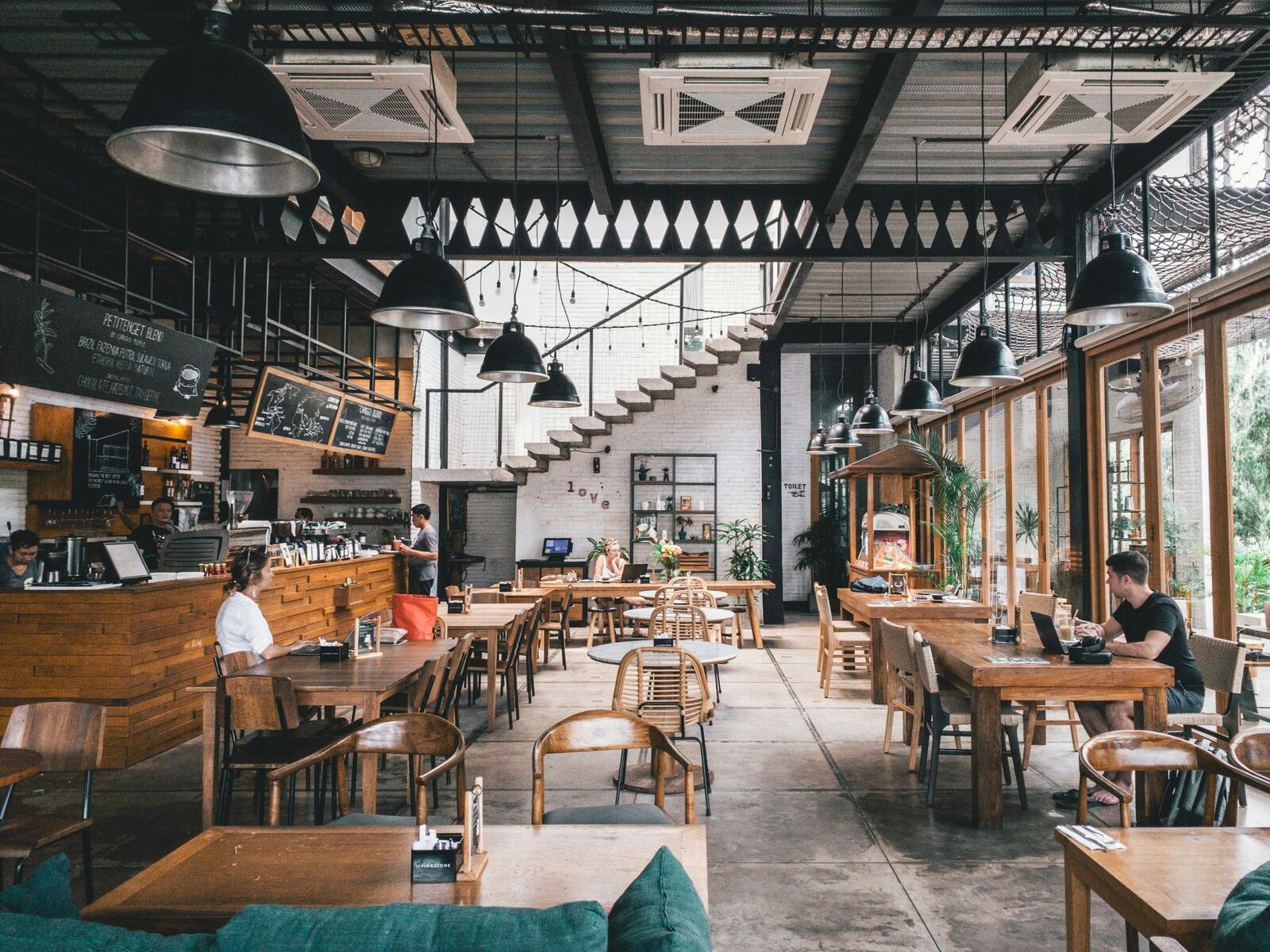
The next step in designing a restaurant is to thoroughly analyze the available space. As an architect, you must carefully examine the layout of rooms, the arrangement of doors and windows. This will help you learn how to manipulate the flow of customers and staff. It is important to provide an ergonomic layout that will enable smooth communication and service for guests.
Design and aesthetics
Only after familiarizing yourself with the technical requirements and the actual possibilities offered by a specific location, can you proceed to design the decor, furniture selection, and equipment arrangement.
Determine the restaurant atmosphere
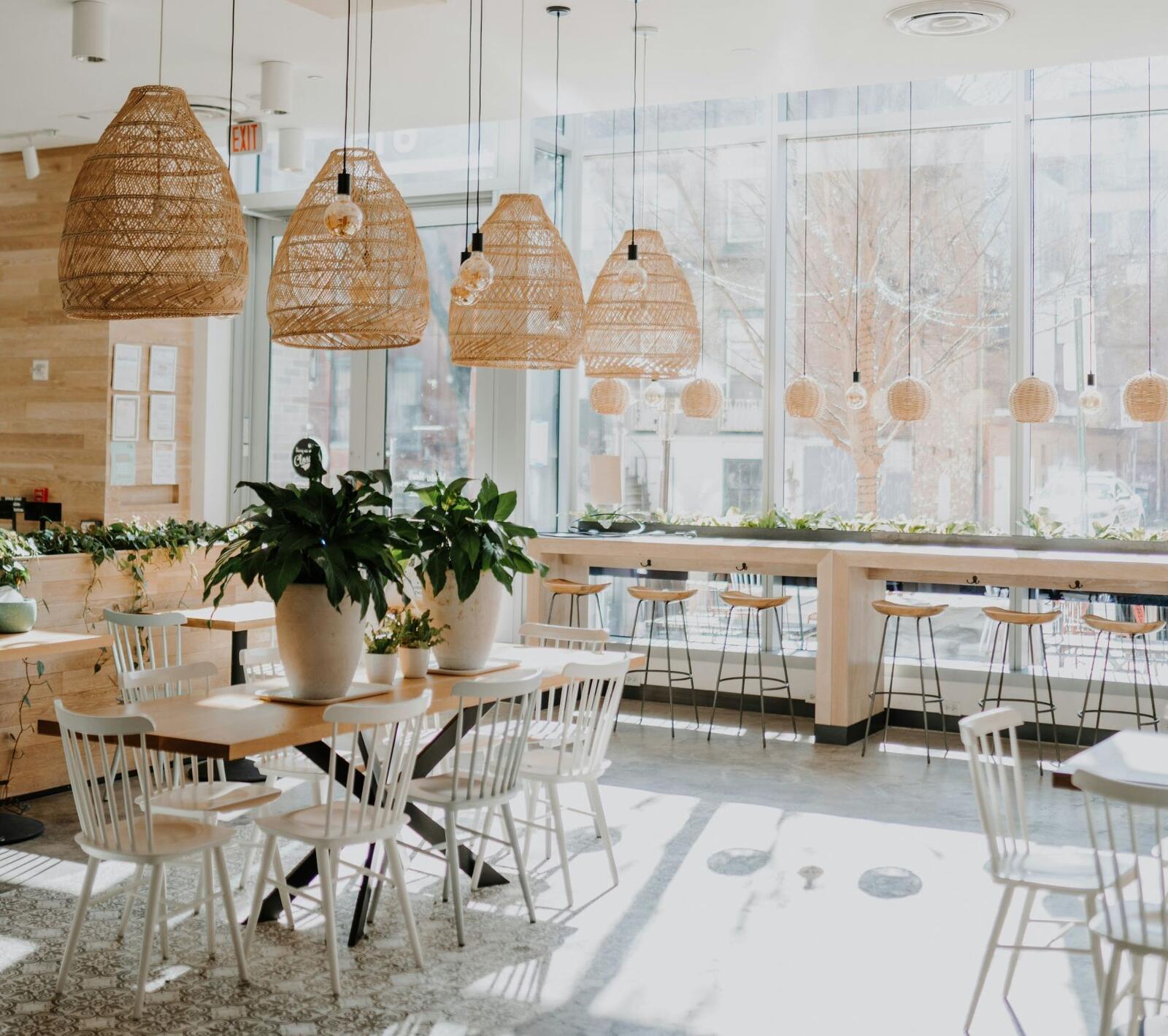
Before you start designing the restaurant and arranging specific furniture inside, consider its atmosphere. Take into account the type of cuisine that will be served and the type of customers you want to attract. Will it be a place for business meetings? Or rather a family-friendly place, ideal for a Sunday meal with children? Or maybe a restaurant with a street food kitchen? You realize that depending on the target customer, the appearance of the venue will be drastically different.
To facilitate your work in designing, prepare a mood board. Gather as much information as possible from the owner and place it on the inspiration board.
What to consider when determining the restaurant atmosphere?
- menu
- target customer
- price range
- location
The restaurant space, its decor, and atmosphere are crucial for how it is perceived by customers. A well-designed restaurant can create a unique atmosphere. Apart from culinary experiences, this is the second most important factor influencing customer acquisition.
Design the space layout
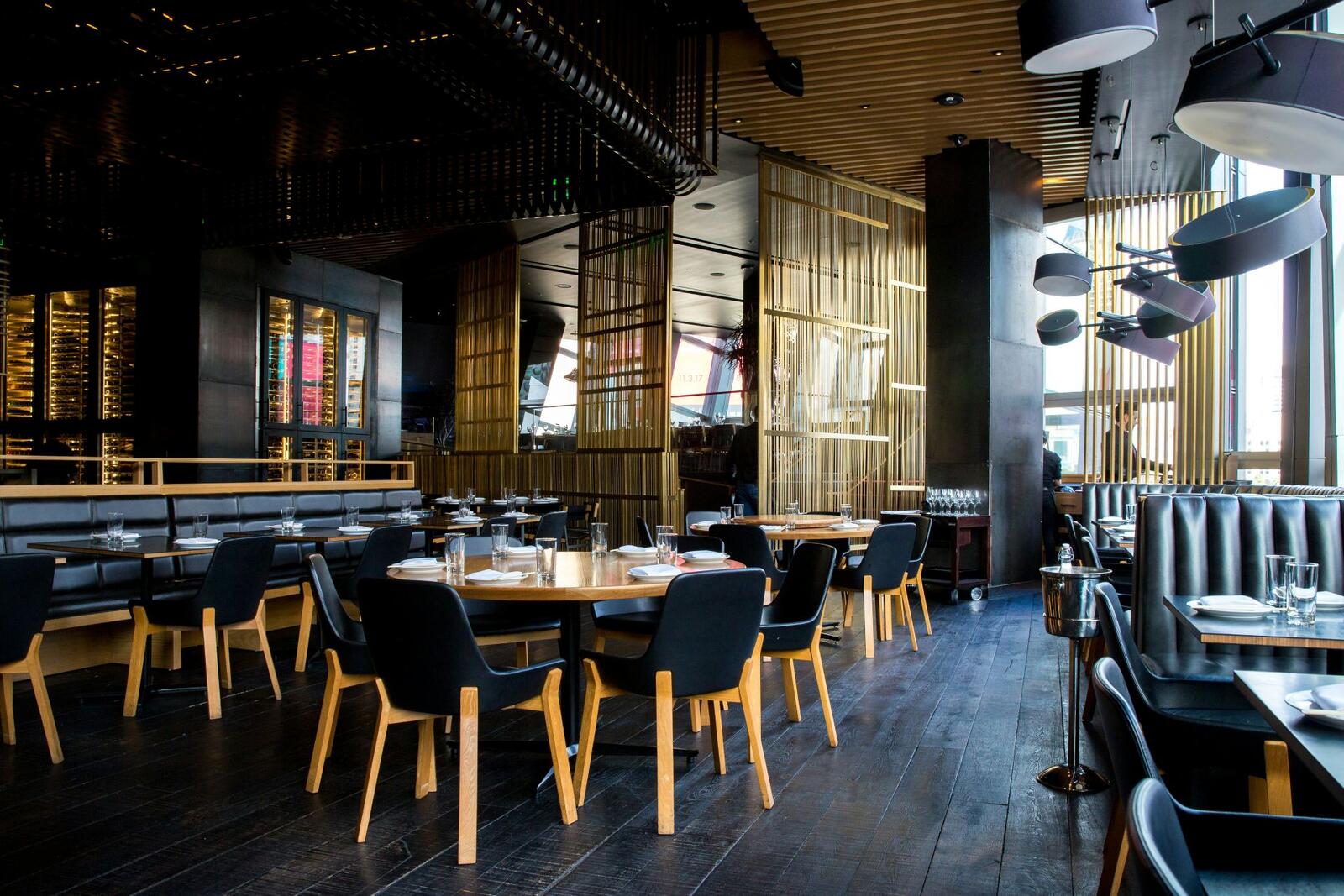
Once you have determined the restaurant atmosphere, you can move on to designing the decor. Ensure that the furniture, wall color, and decorations create a coherent whole, consistent with the venue's atmosphere. At the same time, remember about ergonomics and comply with OSH and fire regulations. Pay attention to lighting - in modern venues, you will design different lighting than in intimate and cozy restaurants. The design of a gastronomic venue should encourage customers to engage in specific activities. In a fast food restaurant, modern, easy-to-clean chairs will be more suitable. In a cozy cafe, opt for comfortable sofas to inspire customers to stay longer.
Technological project for the sanitary inspectorate
Applying for permission to operate a restaurant keeps entrepreneurs in the gastronomy industry up at night. One of the requirements of the sanitary inspectorate is to submit a technological project of the gastronomic venue. The technological project is a document with a detailed description of all technological installations, equipment, and procedures related to hygiene and safety in the restaurant.
What should be included in the technological project of the gastronomic venue:
- Description and location of the rooms.
- Technological installations project. Description including ventilation, air conditioning systems, sewage, gas, and electrical installations.
- Information about the kitchen equipment. Along with technical specifications and equipment layout.
- Information about the safety systems, e.g. fire and alarm systems, smoke detectors, safety-related procedures.
- Description of procedures related to maintaining cleanliness and hygiene in the venue, waste management, food storage.
The technological project is a summary in which it is necessary to prove that the designed restaurant meets all sanitary-epidemiological requirements. Submitting the technological project to the sanitary inspectorate is necessary to obtain permission to operate.
Technological project of the gastronomic venue — summary
As you can see, designing a gastronomic venue is a multi-stage task. To ensure that you are working in accordance with the art, familiarize yourself with the regulations. Creating a place with a climate will be facilitated by good recognition of the target customer group and their needs. As an architect and designer, aim to deliver the highest quality service to your clients.
Author

Przeczytaj o programie AI - Artificial Intelligence na naszym blogu
-
![Virtual staging and AI photos in real estate listings - what does the AI Act change?]()
Virtual staging and AI photos in real estate listings - what does the AI Act change?
The AI Act vs real estate. Does virtual staging require an AI label? Find out how to avoid legal pitfalls and properly label photos. -
![How to Label AI Content According to the Law? Ready-Made Formulas for Designers and Archviz Studios.]()
How to Label AI Content According to the Law? Ready-Made Formulas for Designers and Archviz Studios.
How to Legally Label AI Visualizations? Check When a Label Is Mandatory and Copy Ready-Made Formulas for Your Projects. -
![Do you have to label visualizations as AI? What does the AI Act really say and what changes on August 2, 2026?]()
Do you have to label visualizations as AI? What does the AI Act really say and what changes on August 2, 2026?
AI Act from August 2! Do you have to label 3D visualizations as AI? Check where the legal boundary lies between concept and deepfake. -
![AI for furniture manufacturers - See how to create furniture packshots and catalog arrangements with raya.design]()
AI for furniture manufacturers - See how to create furniture packshots and catalog arrangements with raya.design
Packshots without time-consuming sessions? Discover Raya Design. Change upholstery and create arrangements with AI in moments. See how it works!