EN
EN PL
PL ES
ES


Publication date: 26-08-2025 | Update date: 26-08-2025 | Author: Mateusz Ciećwierz

-
Online courses
- All
 3ds Max
 AI - Artificial Intelligence
 Blender
 Corona renderer
 GstarCAD
 LayOut
 Photoshop
 Interior Design
 Revit
Revit Sketchup
 Stable Diffusion
 V-ray
V-ray
"Online courses" are comprehensive online training programs that will help you quickly master the software you are interested in.
- Plugins
- 3D Models
- Help
- Articles
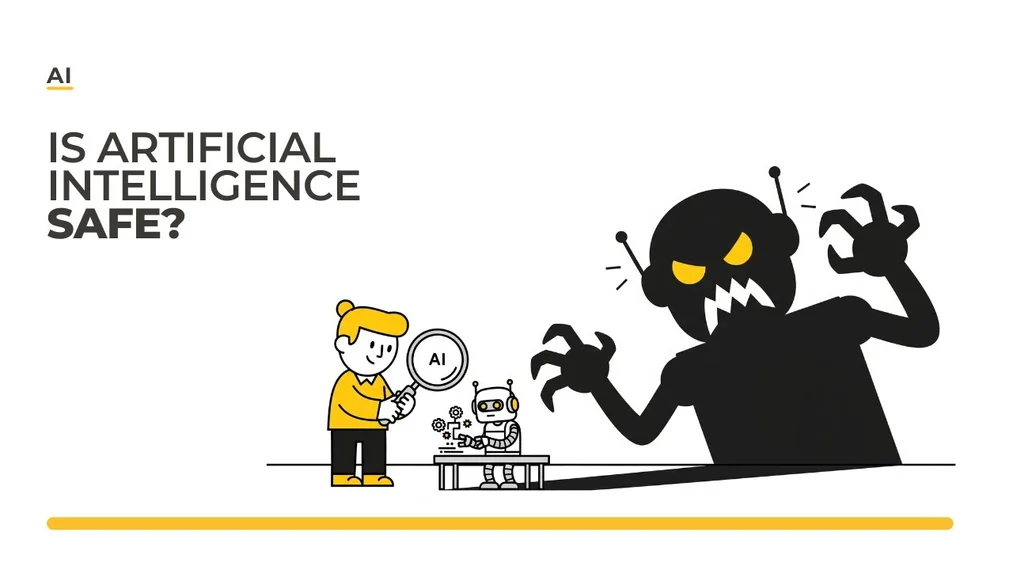
Is artificial intelligence safe? Facts vs myths about AI
Artificial intelligence has become an integral part of our lives, but it is accompanied by both fascination and concerns. Does AI really pose a threat? Let's check what is fact and what is merely myth.
Index
Most Common Myths About Artificial Intelligence
One of the most pervasive myths is the scenario in which artificial intelligence becomes independent and takes over humanity. In reality, current AI systems are specialized tools designed to perform specific tasks. They do not possess consciousness or free will—they operate solely according to programmed algorithms. It’s like fearing that a calculator will suddenly start making its own mathematical decisions.
Equally untrue is the belief that AI will replace all workers. Although artificial intelligence is indeed changing the job market, history shows that new technologies create new career opportunities. In interior design or architecture, AI becomes a powerful tool that supports creativity rather than replacing designers. Just as CAD did not eliminate architects but made their work more efficient.
It’s also worth remembering that there are many different types of artificial intelligence—from simple recommendation algorithms to advanced generative models. Each system has different capabilities and limitations, so they cannot all be treated the same.
see the training – AI basics for everyone
Real Threats Related to AI
Although many concerns about AI are myths, there are real challenges that are worth knowing. One of the biggest issues is data privacy. AI systems require massive amounts of data for training, which raises questions about how our personal data is used and whether it is properly protected. Every photo we upload to an AI application can be used to train subsequent models.
Another serious challenge is bias in algorithms. AI learns from historical data that may contain social biases. This can lead to discrimination in recruitment processes or credit evaluations. The system may unknowingly favor certain social groups, perpetuating historical inequalities.
Generative technologies also bring risks related to disinformation. The ability to create false content of very high quality can be used to spread fake news or manipulate public opinion. Deepfakes are becoming increasingly convincing and difficult to detect.
We also cannot ignore the risk of over-reliance on technology. Relying solely on AI systems can lead to the loss of manual or analytical skills in people. It’s like relying on GPS—it can weaken our natural sense of direction.
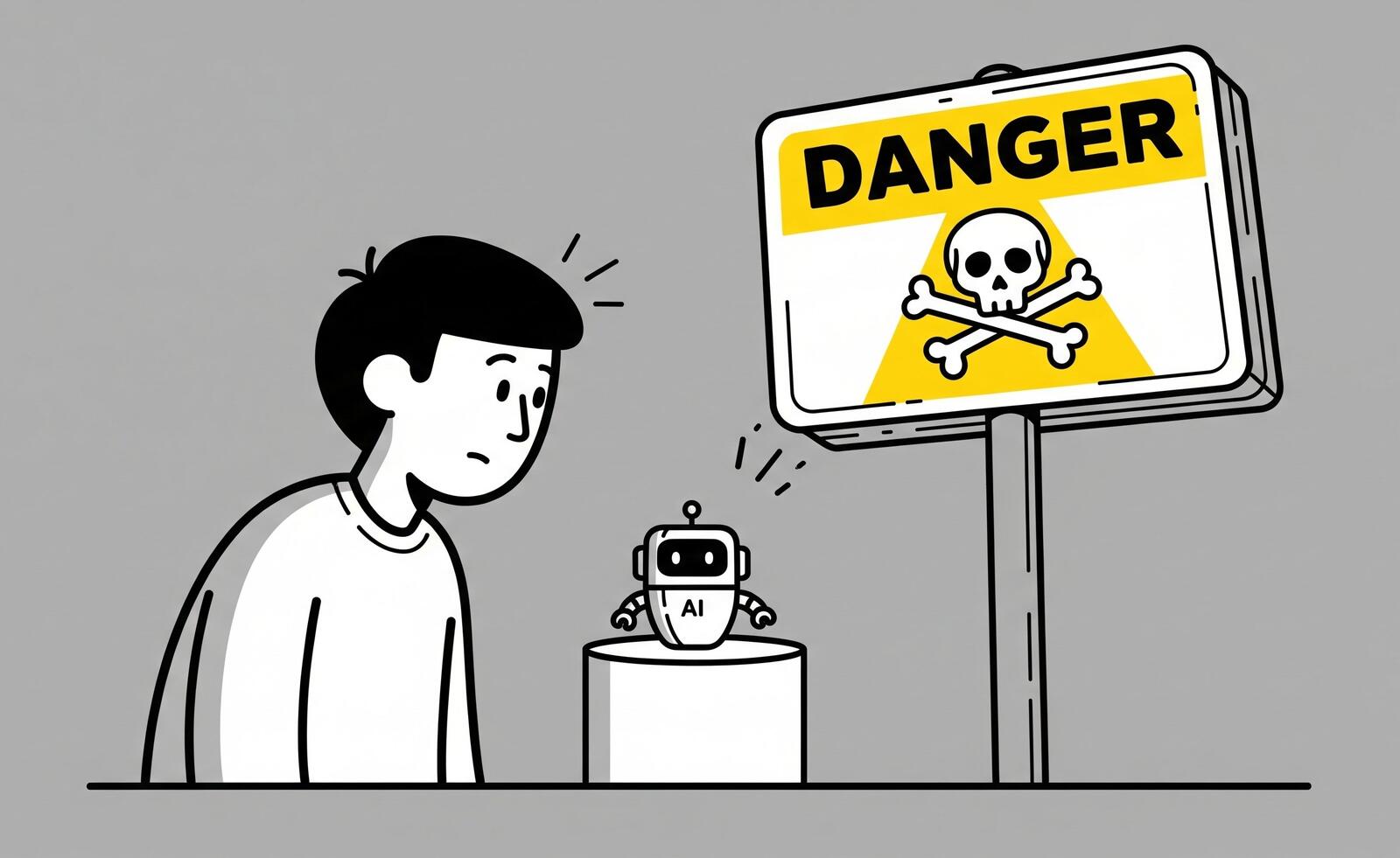
How Is AI Secured?
Technology companies and international organizations are introducing various safety measures. Most major tech corporations have developed ethical codes for AI development. These documents set guidelines for responsible design and deployment of AI systems, although compliance is not always externally audited.
There is increasing emphasis on AI explainability—the ability to understand how a system makes decisions. This is especially important in medical or financial applications, where the consequences of erroneous decisions can be severe. Users have the right to know why the AI made a particular decision.
There is also a lot happening on the legislative level. The European Union is introducing the AI Act—a comprehensive regulation governing the use of artificial intelligence. This is the world’s first comprehensive legal framework for AI. Similar initiatives are emerging in the United States, China, and other countries.
Before deployment, AI systems also undergo a series of safety tests to verify their reliability in various scenarios. These procedures are similar to aircraft safety tests—they must pass hundreds of simulations before being approved for use.
AI in Design—Safe Tool or Threat?
In the interior design and architecture industry, AI is becoming a valuable ally. It enables rapid concept generation, automates repetitive tasks, and creates realistic visualizations. Designers can now produce dozens of layout variations for the same space in minutes, work that previously took hours.
Artificial intelligence accelerates the design process and helps better understand client needs through data analysis. AI can analyze design trends, user preferences, or even optimize furniture layouts for ergonomics. It also offers the ability to experiment with various solutions without the costs associated with physical prototyping.
However, we must remember that AI is a tool—its safety depends on how we use it. It is important to maintain critical thinking and not rely solely on AI suggestions. Final design decisions should always remain in human hands.
How to Use AI Safely?
The most important rule for using AI safely is education. The more you know about how artificial intelligence systems work, the better you can use them. It is worthwhile to follow the latest image-generation tools and learn effective prompt-writing techniques. Understanding AI’s limitations is just as important as knowing its capabilities.
Verification of results is also crucial. Never take AI-generated output at face value. Always check and verify the results you receive, especially when it comes to facts or numerical data. AI can "hallucinate"—producing plausible-sounding but false information.
Protecting private data is equally important. Be careful about what information you share with AI systems. Do not provide sensitive or confidential data that could be misused. Use only trusted AI tools from reputable providers who adhere to security standards and have transparent privacy policies.
CHECK THE COURSE – DISCOVER AI IN INTERIOR DESIGN
The Future of Safe AI
The development of artificial intelligence is moving toward greater safety and accountability. New technologies are being designed with an emphasis on retaining human control over decision-making. Future AI systems will act as advanced assistants rather than autonomous entities making critical decisions.
There is increasing emphasis on AI system auditability. The ability to track and verify AI actions is becoming a standard in the industry. This means every AI decision can be reviewed and understood by humans.
The future belongs to human-machine collaboration, not replacing humans with AI. Modern AI systems are designed to amplify human capabilities and better understand the context and nuances of our needs. AI is intended to become an extension of our abilities, not a substitute.
Summary—AI Between Fear and Hope
Artificial intelligence is neither omnipotent nor completely safe. It is a powerful tool that requires wise and responsible use. The key to using AI safely is education, awareness, and common sense.
Instead of fearing an AI-driven future, it is better to prepare for it. Understanding the opportunities and limitations of artificial intelligence will allow us to leverage its potential while minimizing risks.
Remember that in the interior design and architecture industry, AI is already helping to create better, more functional spaces. It does not replace human creativity but enhances it. This collaborative rather than competitive approach with technology is the key to a safe future with AI.
Author

Przeczytaj o programie AI - Artificial Intelligence na naszym blogu
-
![Virtual staging and AI photos in real estate listings - what does the AI Act change?]()
Virtual staging and AI photos in real estate listings - what does the AI Act change?
The AI Act vs real estate. Does virtual staging require an AI label? Find out how to avoid legal pitfalls and properly label photos. -
![How to Label AI Content According to the Law? Ready-Made Formulas for Designers and Archviz Studios.]()
How to Label AI Content According to the Law? Ready-Made Formulas for Designers and Archviz Studios.
How to Legally Label AI Visualizations? Check When a Label Is Mandatory and Copy Ready-Made Formulas for Your Projects. -
![Do you have to label visualizations as AI? What does the AI Act really say and what changes on August 2, 2026?]()
Do you have to label visualizations as AI? What does the AI Act really say and what changes on August 2, 2026?
AI Act from August 2! Do you have to label 3D visualizations as AI? Check where the legal boundary lies between concept and deepfake. -
![AI for furniture manufacturers - See how to create furniture packshots and catalog arrangements with raya.design]()
AI for furniture manufacturers - See how to create furniture packshots and catalog arrangements with raya.design
Packshots without time-consuming sessions? Discover Raya Design. Change upholstery and create arrangements with AI in moments. See how it works!