EN
EN PL
PL ES
ES


Publication date: | Update date: 11-07-2024 | Author: Mateusz Ciećwierz

-
Online courses
- All
 3ds Max
 AI - Artificial Intelligence
 Blender
 Corona renderer
 GstarCAD
 LayOut
 Photoshop
 Interior Design
 Revit
Revit Sketchup
 Stable Diffusion
 V-ray
V-ray
"Online courses" are comprehensive online training programs that will help you quickly master the software you are interested in.
- Plugins
- 3D Models
- Help
- Articles
How does Artificial Intelligence (AI) work?
Artificial Intelligence (AI) is a fascinating field of science and technology that focuses on creating intelligent machines capable of performing tasks that require human intelligence. AI has a huge impact on our daily lives, from personalizing recommendations in streaming services to autonomous vehicles and advanced medical diagnostic systems. Understanding how artificial intelligence works is crucial to understanding its potential and impact on our society.

Index
AI systems rely on complex algorithms and machine learning models that enable them to analyze vast amounts of data, recognize patterns, and make decisions. Thanks to the continuous development of computational power and the availability of data, applications of artificial intelligence are constantly expanding, encompassing almost every area of life - from medicine and transportation to production and agriculture.
Key Takeaways
- Artificial intelligence is the ability of machines to exhibit human skills such as reasoning, learning, and creativity.
- AI systems rely on data analysis, pattern recognition, and decision-making.
- Applications of artificial intelligence cover a wide range of fields, from medicine to transportation and production.
- The development of AI is driven by advances in computational power and the availability of vast amounts of data.
- Understanding how AI works is crucial for comprehending its potential and impact on society.
What Is Artificial Intelligence (AI)?
Artificial intelligence (AI) is a field of computer science that focuses on creating systems and machines capable of performing tasks that would normally require human intelligence. The goal of AI is to mimic human thinking, learning, and problem-solving. AI systems can analyze data, learn from experience, and make decisions in an autonomous manner.
Definition of Artificial Intelligence
The definition of AI encompasses a wide range of technologies and approaches designed to create intelligent machines. Key aspects of artificial intelligence include:
- The ability to process large amounts of data
- The ability to learn from experience
- Adaptation to new situations and environments
- Solving complex problems
- Interacting with humans in a natural way
Various Types of Artificial Intelligence
There are different types of artificial intelligence that can be divided into three main categories:
- Narrow AI: Systems designed to perform specific tasks, such as speech recognition, language translation, or playing chess.
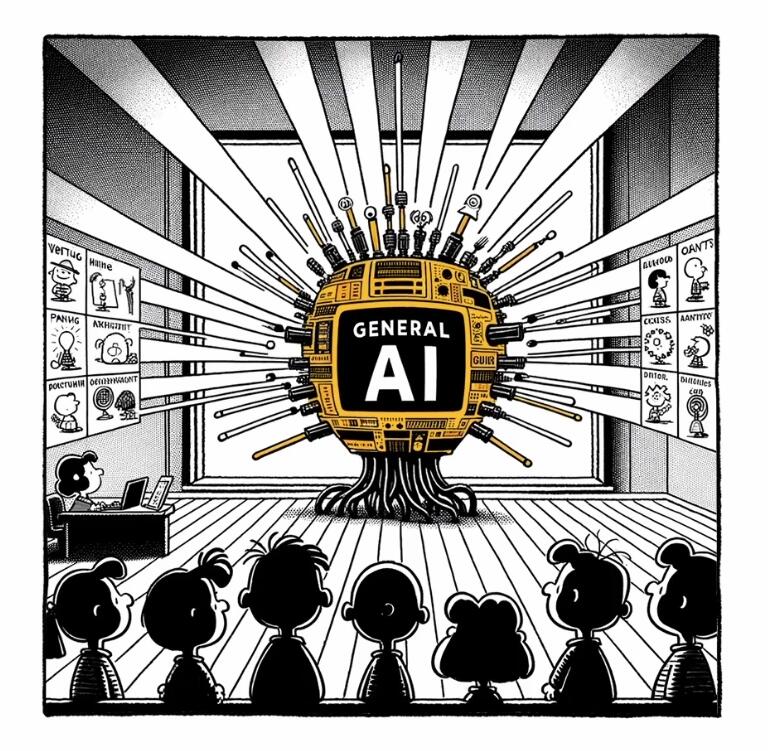
- General AI: Systems capable of performing diverse tasks at a level close to that of humans, demonstrating flexibility and adaptability.
- Super AI: Hypothetical systems that surpass human intellectual capabilities in all fields.
Currently, the most widespread systems are narrow AI, which are used in various sectors such as finance, medicine, and transportation. The development of general AI and superintelligence is still a matter of the future, but scientists and researchers are intensively working to achieve these goals.
Functioning of Artificial Intelligence
Artificial intelligence is a fascinating field that relies on complex processes of data analysis, learning, and decision-making. The functioning of AI involves processing vast amounts of information, detecting patterns, and adapting to changing conditions. As a result, AI-based systems are capable of performing tasks that were previously reserved for humans.

Data Analysis and Machine Learning
The foundation of AI's functioning is data analysis. Artificial intelligence systems need access to large sets of information to learn and improve their performance. Machine learning involves processing input data, detecting regularities and dependencies, and then generating appropriate outcomes or making decisions based on acquired knowledge.
Machine learning can take place in various ways depending on the type of problem and the available data. Among others, we distinguish:
- Supervised learning - the system learns from labeled examples, where input data is associated with expected results.
- Unsupervised learning - AI independently discovers hidden structures and dependencies in data without previous labeling of examples.
- Reinforcement learning - the system learns through interaction with the environment, receiving rewards or penalties for actions taken.

Decision-Making and Task Performance
After the stage of data analysis and learning, artificial intelligence is ready to make decisions and perform tasks. Depending on the application, this may include object classification, predicting future events, process optimization, or controlling automatic systems.
The operation of AI in this regard is based on the use of decision-making algorithms, which, based on available data and learned patterns, select the most optimal solutions. Artificial intelligence systems can process information in real-time, enabling quick responses to changing conditions and making accurate decisions.
SEE - TRAINING - ARTIFICIAL INTELLIGENCE IN INTERIOR DESIGN
Techniques Used in Artificial Intelligence
Artificial intelligence utilizes many advanced techniques and algorithms that enable the effective operation of AI systems. Among the most popular solutions are:
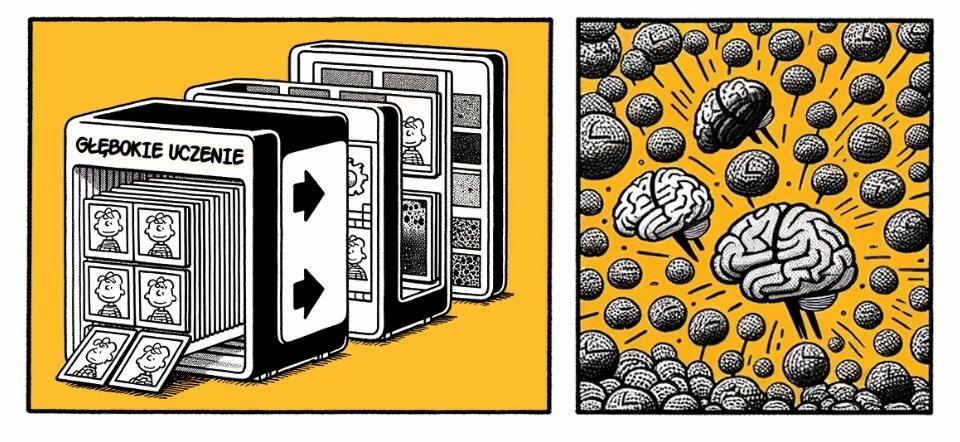
- Neural networks - structures inspired by the functioning of the human brain, consisting of interconnected nodes processing information.
- Deep learning - a type of machine learning that uses multi-layered neural networks for analyzing complex data.
- Fuzzy logic - an approach that allows describing imprecise and uncertain information using degrees of membership in fuzzy sets.
- Evolutionary algorithms - techniques inspired by the process of biological evolution used for the optimization of solutions through selection, crossover, and mutation.
The functioning of artificial intelligence is based on complex processes of data analysis, machine learning, and decision-making. Thanks to the continuous development of AI algorithms and techniques, these systems are becoming increasingly advanced and effective in solving complex problems. Artificial intelligence has enormous potential, which can revolutionize many areas of our lives.
Applications of Artificial Intelligence
Artificial intelligence is finding increasingly broad applications in various fields, contributing to improving efficiency, safety, and service quality. Here are a few examples of how AI is changing our daily lives and the functioning of society.
Medicine and Healthcare
One of the most promising applications of AI is in medicine and healthcare. Researchers are exploring the possibilities of using artificial intelligence to analyze large amounts of health-related data and recognize patterns, leading to new discoveries in medicine and improved individual diagnostics. AI in healthcare can also support physicians in decision-making, expedite the diagnostic process, and improve its accuracy.
An innovative application of AI in medicine is a program for handling emergency calls that aims to recognize cardiac arrest during calls faster and more effectively than a medical dispatcher. Another project is KConnect, co-funded by the EU, which develops multilingual texts and search services to help find the most relevant available medical information.
Architecture and Interior Design
Artificial intelligence can revolutionize architecture and interior design, offering new tools and possibilities. Thanks to advanced AI algorithms, designers can generate and analyze thousands of design variants in a short time, optimizing spatial layouts in terms of functionality, aesthetics, and energy efficiency. AI can also support the personalization of projects, adapting interiors to individual needs and user preferences through data analysis and trend forecasting. Additionally, artificial intelligence enables the creation of realistic 3D visualizations, facilitating the presentation of concepts to clients and supporting the decision-making process. More on this topic can be found in our article - How Artificial Intelligence Helps Interior Architects?
GET FREE WEBINAR - AI IN INTERIOR DESIGN AND ARCHITECTURE
Transportation and Logistics
Artificial intelligence can significantly improve the safety, speed, and efficiency of transportation. In the railway industry, AI could minimize wheel friction, maximize speed, and enable autonomous driving. Although fully autonomous vehicles are not yet the standard, cars already utilize AI-based safety features, such as automated sensors detecting potential hazards and accidents, developed under the VI-DAS project. Navigation also heavily relies on AI.
Manufacturing and Industry
AI in manufacturing and industry can help European producers increase efficiency and bring factories back to Europe. Smart factories use robots in manufacturing processes, optimize sales paths, and predict the timely service needs of machines, preventing failures. The SatisFactory project, co-funded by the EU, utilizes collaboration systems and augmented reality to increase job satisfaction in smart factories.
Agriculture and Food System
Artificial intelligence can contribute to building a balanced EU food system. By minimizing the use of fertilizers, pesticides, and irrigation, AI can provide healthier food, increase productivity, and reduce the environmental impact of this sector. Robots can be used to remove weeds with precision, which should limit the use of herbicides. Many farms in the EU already use artificial intelligence to monitor the movement, temperature, and feed consumption of livestock.
Crisis Management and Natural Disasters
AI can play a significant role in crisis management and predicting natural disasters. Through a wide range of data and pattern recognition, AI-based systems can warn early about impending threats, enabling effective preparation and mitigation of the impacts. Although 61% of Europeans are positive about artificial intelligence and robots, 88% consider that these technologies require careful management (according to the Eurobarometer survey from 2017, EU-28).
Graphics and Creative Industry
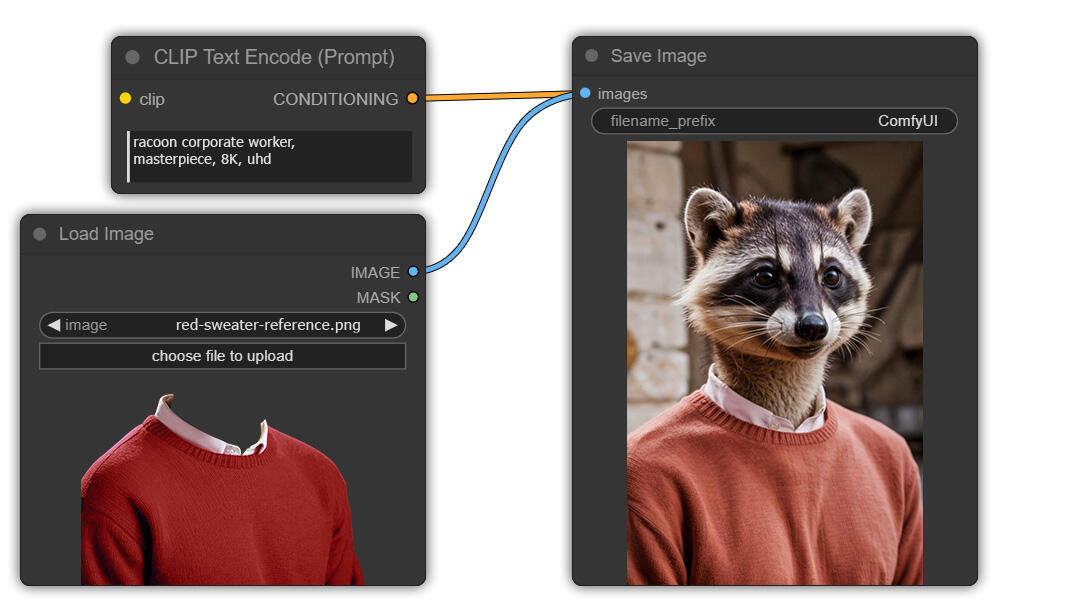
Artificial intelligence is finding growing applications in graphic design and the creative industry, bringing innovative solutions and improvements. AI algorithms can generate realistic images, animations, and 3D models, significantly speeding up the visual concept creation process. AI also supports graphic editing, automating tasks such as photo retouching, coloring, and image enhancement. In the creative industry, AI can analyze trends, predict the popularity of various styles, and suggest new artistic directions. With AI, artists and designers can experiment with new forms of expression, combining their talents with advanced technologies to create innovative and engaging works.
Conclusions
Artificial intelligence has the potential to revolutionize virtually every aspect of our lives and the economy. The future of AI looks incredibly promising, and its applications can bring enormous changes in many fields. At the same time, the development of this technology poses certain challenges, such as the need to provide appropriate training for workers and to invest in infrastructure.
With the advance of AI, career prospects in this industry are becoming increasingly attractive. The demand for specialists, such as data analysts, machine learning engineers, or artificial intelligence experts, is constantly growing. AI can be utilized in various ways, depending on the specific nature of a company or position - from process automation, through data analysis, to improving customer interactions and creating innovative products.
However, we must not forget about the ethical aspects related to the development of artificial intelligence. This powerful technology can significantly impact many spheres of social and economic life, making it essential for its implementation to be responsible and well-thought-out. It is important to deepen our knowledge about AI to effectively harness its capabilities in our work and daily life, while being aware of potential risks and challenges associated with it.
FAQ - Frequently Asked Questions about Artificial Intelligence
What Is Artificial Intelligence (AI)?
Artificial intelligence is a field of computer science that focuses on creating systems and machines capable of performing tasks that would normally require human intelligence, such as understanding natural language, speech recognition, image recognition, and decision-making.
What Are the Key Characteristics of AI Systems?
The most important characteristic of AI systems is the ability to learn and adapt. Through the analysis of large datasets, AI systems can learn how to properly execute tasks and adjust their behavior.
What Are the Main Types of Artificial Intelligence?
There are various types of AI, but the most advanced form is machine learning. The main types of AI include software (virtual assistants, image analysis software, search engines, speech and face recognition systems) and “embodied” AI (robots, autonomous vehicles, drones, Internet of Things).
How Does Artificial Intelligence Work?
The functioning of artificial intelligence is based on data analysis, learning, and decision-making or task execution based on this learning. AI uses algorithms and data models to simulate human thinking.
What Techniques Are Used in Artificial Intelligence?
AI utilizes a range of techniques, including neural networks, genetic algorithms, fuzzy logic, expert systems, and others. Many of these techniques are inspired by nature, particularly by the way the human brain functions. Deep learning is an advanced type of machine learning that uses algorithm networks inspired by the brain's structure, known as neural networks.
What Are the Applications of Artificial Intelligence in Medicine?
Researchers are exploring the possibilities of using artificial intelligence for analyzing large amounts of health-related data and recognizing patterns, leading to new discoveries in medicine and improving individual diagnostics. AI can also be used for handling emergency calls and recognizing cardiac arrest during calls faster and more effectively than a medical dispatcher.
How Can Artificial Intelligence Be Used in Transportation and Logistics?
Artificial intelligence could improve safety, speed, and traffic efficiency by minimizing wheel friction, maximizing speed, and enabling autonomous driving. Although fully autonomous vehicles are not yet standard, cars already use AI-based safety features. Navigation also heavily relies on AI.
Author

Read on our blog
-
![Profile Builder 4 or Magic Molding? Comparison of Ornamentation Plugins in SketchUp]()
Profile Builder 4 or Magic Molding? Comparison of Ornamentation Plugins in SketchUp
How does Profile Builder 4 differ from Magic Molding? Scope, pricing, profile libraries, and learning curve. Find out which plugin fits your projects. -
![The Best Free SketchUp Plugins for Interior Designers in 2026!]()
The Best Free SketchUp Plugins for Interior Designers in 2026!
Which SketchUp plugins are really worth having? Discover 7 free extensions for interior designers and find out which ones have just stopped being free! -
![English wainscoting in SketchUp - how to design wall panels step by step]()
English wainscoting in SketchUp - how to design wall panels step by step
How to design English wainscoting in SketchUp? Learn the rules for panel division, wainscot proportions, and speed up your work with the Magic Molding plugin. -
![Reversed Faces in SketchUp – why are blue faces showing and how to fix them?]()
Reversed Faces in SketchUp – why are blue faces showing and how to fix them?
Blue faces in SketchUp are flipped faces. Learn where they come from, how to quickly locate and fix them before they mess up your render or model export.