EN
EN PL
PL ES
ES


Publication date: | Update date: 20-05-2024 | Author: Mateusz Ciećwierz

-
Online courses
- All
 3ds Max
 AI - Artificial Intelligence
 Blender
 Corona renderer
 GstarCAD
 LayOut
 Photoshop
 Interior Design
 Revit
Revit Sketchup
 Stable Diffusion
 V-ray
V-ray
"Online courses" are comprehensive online training programs that will help you quickly master the software you are interested in.
- Plugins
- 3D Models
- Help
- Articles
The Most Important Principles of Kitchen Design - Guide
Designing a kitchen is not only an aesthetic challenge but above all a practical one. The kitchen should be the heart of the home, a place that supports everyday functionality and convenience. Kitchen ergonomics play a crucial role - every element must be tailored to the user's needs. To achieve this, it is necessary to follow a few principles, such as adopting an efficient plan for work zones and intelligent space management.
In the article, we will cover key issues that will allow for functional kitchen design, regardless of size and shape. We will familiarize ourselves with the concept of the work triangle, which is one of the pillars of proper arrangement of activity zones. Proper placement of household appliances and thoughtful arrangement of kitchen furniture and accessories are the foundations of an efficient kitchen.

Index
Adhering to the principles of kitchen design affects the quality of life for household members. A kitchen needs to be a space in which meal preparation becomes a time for relaxation and pleasure. Implementing these key principles will make it a functional and ergonomic space that meets the expectations of even the most demanding users.
Summary of Key Information
- Careful planning of the kitchen in the context of ergonomics enhances usability comfort.
- Practical placement of household appliances according to ergonomic principles is the cornerstone of a functional kitchen.
- Considering work zones and well-thought-out kitchen space layout ensures operational efficiency.
- Kitchen design should be tailored to the individual needs of the users to maximize practicality.
- Adopting the work triangle principle significantly streamlines the meal preparation process.

Optimal Kitchen Layout - Location Criteria
When considering a kitchen design, strategically locating it in the house is crucial to optimize various aspects of usage. Both the kitchen's location and orientation are critical for comfort and functionality of this central space in the home.
Role of Natural Lighting and Orientation
Exposure to natural light is fundamental – it reflects not only practical but also aesthetic aspects. A kitchen with south-facing windows receives abundant light throughout the day, which is beneficial for the residents’ health and mood. Conversely, northern orientation limits direct sunlight, which is crucial on hot days, preventing the room from overheating.
Accessibility and Kitchen Entry – Practical Aspects
Easy access to the kitchen, from both the main parts of the house and the outside, facilitates the logistics of daily activities such as bringing in groceries or serving meals. A kitchen's location also promotes better communication flow, which is particularly important in multi-generational homes where different needs must be balanced.
CHECK ONLINE COURSE - HOW TO DESIGN A KITCHEN
Significance of Window Views – Atmospheric Factor
The view offered by kitchen windows has a significant impact on the atmosphere while preparing and consuming meals. A view of a green garden can induce a sense of peace and relaxation, while an urban landscape provides a dynamic backdrop for the fast-paced family life.
Understanding these principles will assist in creating a thoughtful kitchen design that is not only visually appealing but, above all, functional and user-friendly.
Size and Shape of Kitchen Space – Design According to Needs
Designing an ergonomic kitchen that adequately responds to kitchen adaptation to user needs is crucial for the comfort and efficiency of daily use. Whether dealing with small or large spaces, kitchen space planning must focus on maximizing the available area.
Expert's opinionPiotr KurpiewskiArchitekt, Grafik, Wykładowca PJATK w Warszawie
Kitchen design requires an understanding of users' specific needs and the application of key principles that ensure functionality and aesthetics of this central point in the home. Above all, the kitchen should be ergonomic – the organization of space must facilitate natural workflow and minimize the need for excessive movement. It is important that meal preparation, storage, and dishwashing areas are logically arranged, creating the so-called 'golden triangle', which ensures optimal efficiency.
In the case of smaller kitchens, intelligent use of every available centimeter is crucial to secure working space, storage, and meal consumption areas. Solutions such as pull-out cabinets or integrated household appliances can significantly improve the ergonomics of small kitchens.
- Utilization of multifunctional furniture that can serve several functions simultaneously.
- Intelligent kitchen space planning involving corner cabinet and drawer solutions.
- Utilization of retractable technology for appliances that can be easily stored after cooking.
On the other hand, larger kitchens offer the luxury of broader design possibilities – from installing spacious kitchen islands to dining areas where the entire family can gather for meals. Here, it is also essential that an ergonomic kitchen is designed in a way that allows fluid movement between functional zones.
- Planning independent zones that allow meal preparation without interfering with other household members.
- Maintaining adequate distances between individual points – cooking hob, sink, refrigerator.
- Integration of seating areas in a way that does not impede movement and allows comfortable use of the space.
A properly designed space is crucial for kitchen adaptation to needs to be effective and bring joy to cooking every day.
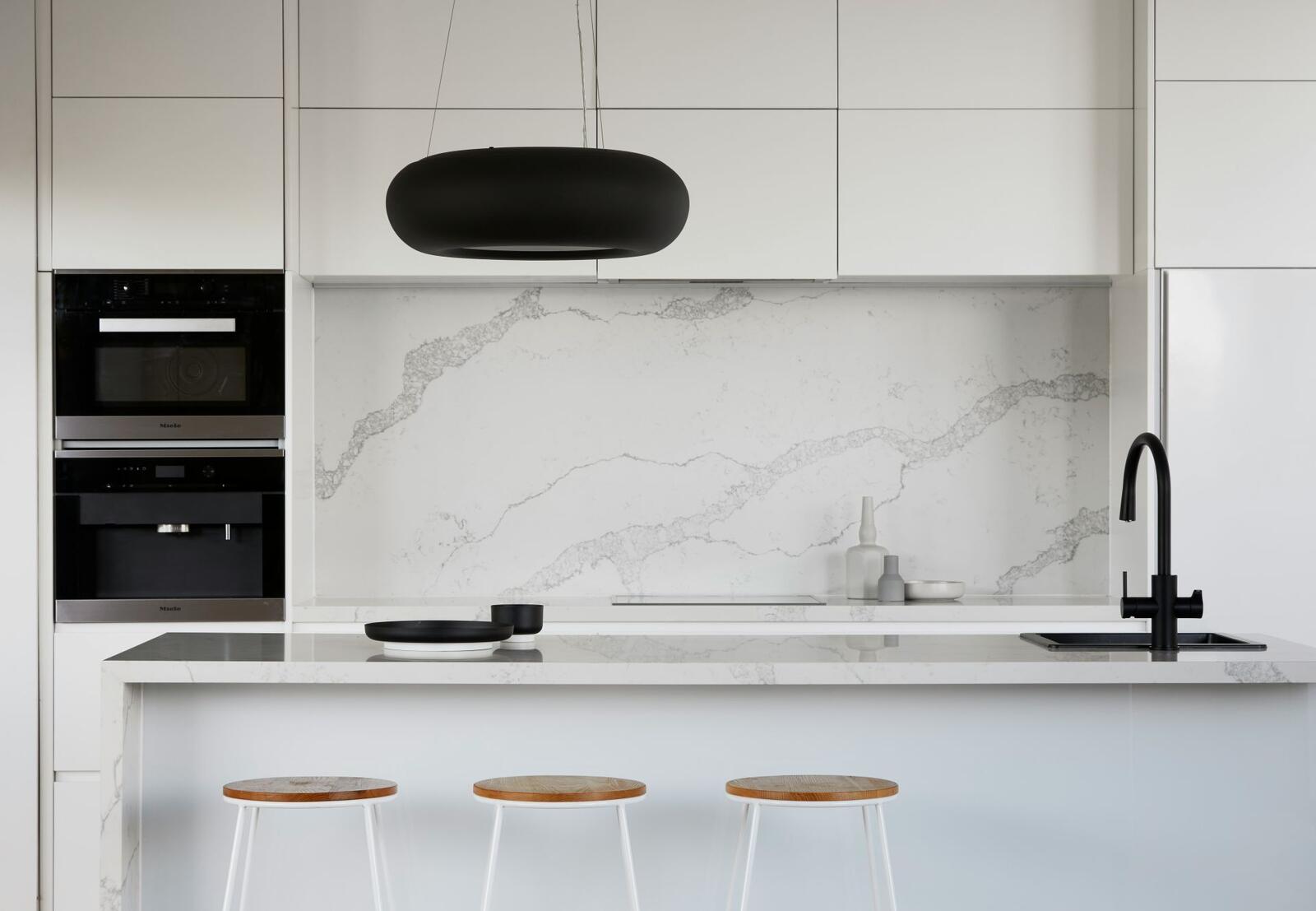
Kitchen Design Principles – Functionality Above All
When creating the perfect kitchen, the key is to combine kitchen equipment, ergonomics, and style to ensure not only functionality but also aesthetic satisfaction of the users. Thoughtful decisions regarding the arrangement of appliances and the selection of their types significantly impact the ultimate comfort and practicality of the kitchen. The appropriate home appliances in kitchen design are the foundation that influences the daily efficiency of kitchen activities.
Selection of Household Appliances and Their Placement
When choosing household appliances, it is essential to pay attention not only to their functionality but also to how they will complement the overall kitchen concept. Adhering to the principles of stylish kitchen design, it is advisable to select appliances that will complement the space, not only technically but also visually. The arrangement of these devices should allow easy access and efficient work in the kitchen, without causing unnecessary chaos.
Ergonomics and Style – Ever-Present Trends in Design
Ergonomics in the kitchen is a foundation that should go hand in hand with the latest design trends. Regardless of whether you prefer modern or traditional kitchen equipment, attention should always be paid to ensure that the arrangement and style of household appliances facilitate natural human movements. This not only enhances user comfort but also gives the space a unique character that will delight all residents.
SEE ONLINE TRAINING - HOW TO DESIGN A KITCHEN
Work Zones as a Key to Efficiency
Designing zones in the kitchen can significantly impact everyday culinary experiences. Properly planning work zones in the kitchen allows for smooth movement between tasks, minimizing redundant work and time spent on food preparation. Understanding and applying the principles of creating an efficient kitchen translates into comfort and functionality of the space.
- Storage Zone: It is crucial for ingredients to be easily accessible and well-organized.
- Storage Zone: Optimal placement of cookware, utensils, and kitchen equipment.
- Wet Zone: The sink and dishwasher must be located close to each other to facilitate cleaning and cooking.
- Meal Preparation Zone: Ample countertop for chopping, mixing ingredients, centrally located.
- Cooking Zone: The cooktop and oven placed to ensure safe and comfortable use.
When designing work zones in the kitchen, it's also essential to remember proper ergonomics of the workplace – the height of countertops, appliance placement, and easy access to the most frequently used tools are essential, making the kitchen efficient. Applying these principles allows for creating a space that is not only practical but also enjoyable to use every day.
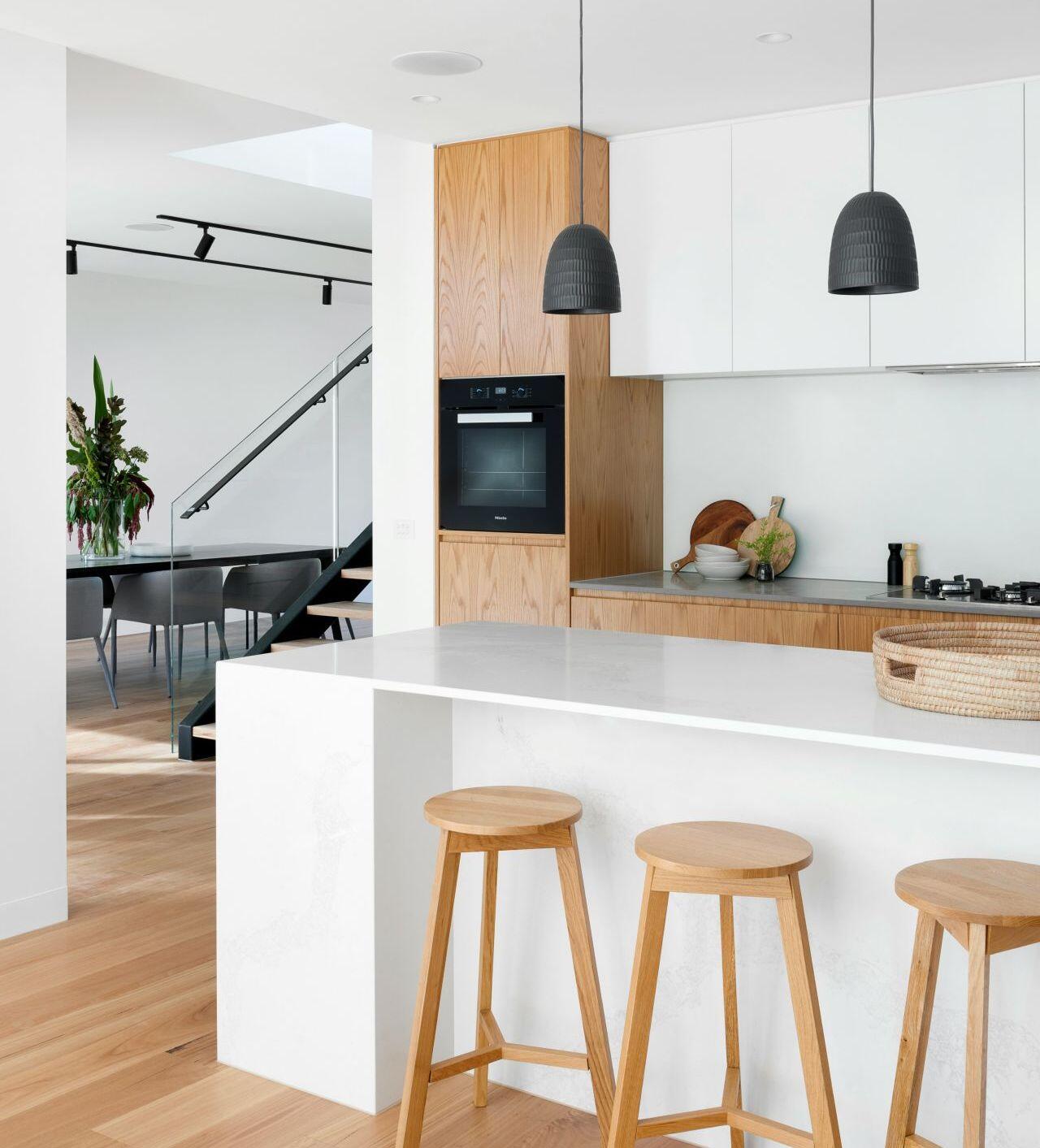
Work Triangle – The Heart of a Well-Designed Kitchen
Designing a functional kitchen requires attention to many details, but one of the fundamental aspects remains the work triangle in the kitchen. The idea is simple, but its application can revolutionize everyday kitchen activities. Focusing on intelligent placement of the refrigerator, sink, and hob allows for maintaining workflow and minimizing time spent moving between crucial areas.
Significance of Proper Distances between Work Zones
It is no coincidence that the ideal kitchen layout is one that shortens the distance between key activity points. It's not about creating the smallest kitchen possible, but about optimizing space, enabling the user to operate efficiently because everyone performs their tasks in a slightly different sequence. Planning the work triangle helps avoid unnecessary movements and promotes order.
Avoiding Common Errors in Appliance Placement
Skilful kitchen design also involves avoiding errors in the kitchen that might seem minor but significantly reduce its utility. It is essential not to place the refrigerator directly next to the oven or cooktop, which could lead to excessive heating of the cooling device and unnecessary energy consumption. Careful planning of appliance placement, considering the work triangle, not only facilitates daily tasks but also makes the kitchen a place where work becomes a pleasure.
Author

Read on our blog
-
![Profile Builder 4 or Magic Molding? Comparison of Ornamentation Plugins in SketchUp]()
Profile Builder 4 or Magic Molding? Comparison of Ornamentation Plugins in SketchUp
How does Profile Builder 4 differ from Magic Molding? Scope, pricing, profile libraries, and learning curve. Find out which plugin fits your projects. -
![The Best Free SketchUp Plugins for Interior Designers in 2026!]()
The Best Free SketchUp Plugins for Interior Designers in 2026!
Which SketchUp plugins are really worth having? Discover 7 free extensions for interior designers and find out which ones have just stopped being free! -
![English wainscoting in SketchUp - how to design wall panels step by step]()
English wainscoting in SketchUp - how to design wall panels step by step
How to design English wainscoting in SketchUp? Learn the rules for panel division, wainscot proportions, and speed up your work with the Magic Molding plugin. -
![Reversed Faces in SketchUp – why are blue faces showing and how to fix them?]()
Reversed Faces in SketchUp – why are blue faces showing and how to fix them?
Blue faces in SketchUp are flipped faces. Learn where they come from, how to quickly locate and fix them before they mess up your render or model export.